
In Brief
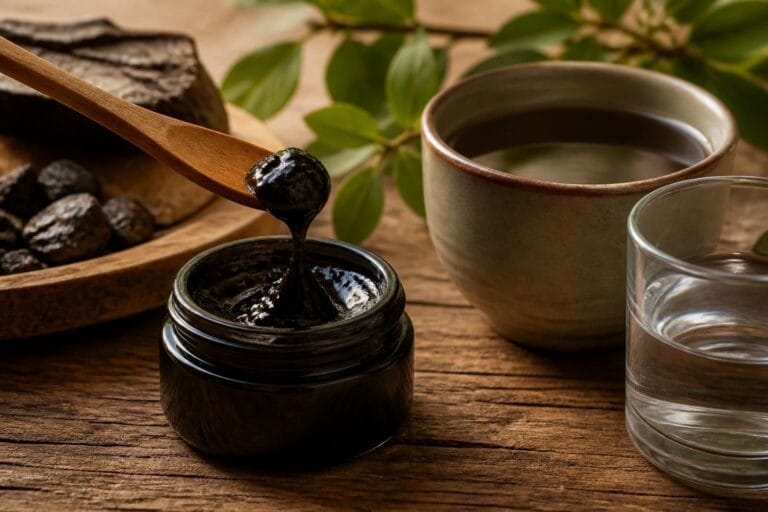
Shilajit is a natural resin sourced from mountains, traditionally used to support energy, recovery, and vitality.
The most sought-after form remains the pure resin. However, powder, capsules, softgels, and liquid extracts may suit your habits.
A cautious dosage usually starts around 250 mg per day, with gradual adjustment depending on tolerance and needs.
Sublingual intake, dissolving in a warm drink, or mixing with honey are among the most practical methods.
Quality is paramount: controls, traceability, purity, and safety are essential to avoid impurities and heavy metals.
Dense, dark, and with a mineral scent, Shilajit intrigues as much as it attracts. For centuries, this natural material from the Himalayas has accompanied traditional uses related to physical endurance, stress adaptation, and overall body support. It’s gaining attention among very different profiles: tired active people, athletes recovering, and individuals seeking better daily balance. Its interest lies as much in its tradition as in its composition, notably its fulvic acids and minerals.
The real question is therefore not only “what is it for?”, but “how to take it properly?”. The chosen form, time of day, product quality, and dosage can change the experience. Between raw resin, powder, softgels, and liquid extracts, there are simple, concrete, and adaptable uses. With some reliable guidelines, you can aim for a better routine, without excess or improvisation.
Understanding Shilajit: natural resin and benefits for vitality
Origin and composition of Shilajit
Shilajit slowly forms from compressed plant and microbial matter in high mountain rocks. Due to temperature variations, a dark resin seeps from the walls and is then collected, purified, and prepared for consumption. This slow maturation partly explains its biochemical richness.
Analyses highlight the presence of fulvic acids, humic acids, and many trace elements. A scientific study published in the International Journal of Alzheimer’s Disease states that Shilajit is “a potent and very safe dietary supplement” with procognitive potential, while emphasizing the necessity of rigorous purification to eliminate impurities and heavy metals: PubMed source (PMID 22482077).
The benefits of Shilajit on body and mind
Shilajit is especially sought for its potential support to energy, endurance, and vitality sensation. For some users, regular intake is part of a morning routine to start the day better. For others, it accompanies more demanding physical or mental recovery periods.
The scientific literature remains cautious but encouraging on several fronts, such as fatigue, oxidative stress, and mitochondrial function. A clinical study on physically active men observed interesting markers related to recovery and exercise adaptation, without turning the product into a miracle solution: effects of Shilajit in bodybuilding. The practical interest is clear: well-used, it can be part of a comprehensive wellness approach.
Shilajit and Ayurvedic medicine: an ancient tradition
In Ayurveda, Shilajit is classified among supportive substances, intended to strengthen general balance rather than act as a strong stimulant. This nuance is useful. Many expect an immediate “boost,” whereas the traditional logic relies more on regularity, assimilation, and duration.
An Ayurvedic practitioner would readily say that a good substance poorly used yields mediocre results. This is exactly the case here: choosing the appropriate form and realistic rhythm makes all the difference. This ancient tradition thus meets a very modern idea: consistency is better than haphazard intake.
Choosing the ideal form of Shilajit for optimal absorption
Pure resin versus powder: advantages and uses
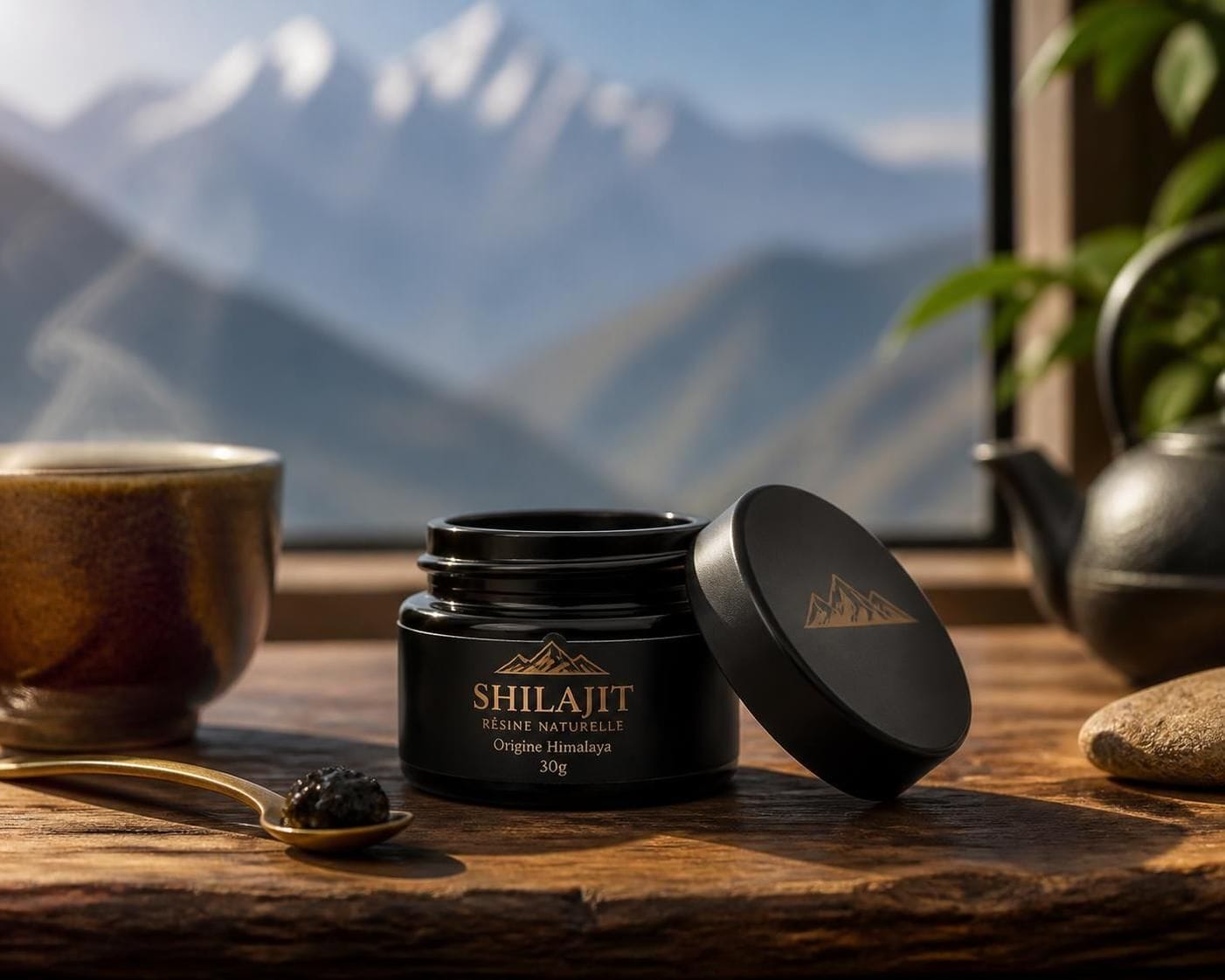
The pure resin remains the preferred form for demanding users. It is minimally processed, concentrated, and allows flexible use: under the tongue, in warm water, tea, or coffee. For many, it is the form closest to the original material and offers the best perceived absorption.
Powder appeals for its practicality. It is easier to dose into a smoothie, porridge, or post-workout drink. Its appeal is logistical, even if quality strongly depends on the manufacturing process. If you hesitate between several brands, comparing user feedback can help, for example via this detailed review or this feedback on another brand.
Capsules and liquid extracts: simplicity and quick use
Capsules and softgels suit people put off by the earthy taste of Shilajit. They simplify the routine, especially when traveling. However, they offer less flexibility to fine-tune the daily dose, which can matter when starting out.
Liquid extracts are appreciated for quick intake. A few drops diluted in water allow discreet and regular use. For those who want to avoid any friction in their routine, it’s a credible solution, provided the actual extract concentration is verified.
Ensuring quality and purity: essential selection criteria
A good Shilajit must be purified, traced, and analyzed. Concrete criteria to examine are laboratory certificates, absence of contaminants, clearly stated origin, and manufacturer’s reputation. The major alert concerns heavy metals, a widely documented risk when a product is poorly sourced.
To better understand these precautions, you can consult the risks linked to poor-quality Shilajit. The most attentive consumers also compare formulations and usage experience, as in this comparison between two references. Here, the rule is simple: a nice marketing promise never replaces serious control.
| Form | Main asset | Limit | Suitable profile |
|---|---|---|---|
| Pure resin | Flexibility of use and rapid absorption perception | Strong taste | Regular users, connoisseurs |
| Powder | Easy to mix with drinks and food | Variable quality depending on brands | Pragmatic people, athletes |
| Capsules, tablets | Maximum practicality | Less flexible for dose adjustment | Beginners, travelers |
| Liquid extract | Quick use | Concentration to verify | Simple and hurried routines |
Effective methods to take Shilajit and maximize its effects
Sublingual intake and dissolution in hot or cold drinks
Sublingual intake consists of placing a small portion of Shilajit under the tongue for a few moments before swallowing. This method appeals to those seeking quick absorption and a more direct felt effect, especially in the morning on an empty stomach. If the taste seems intense, a warm drink remains an excellent alternative.
Tea, coffee, infusion, or cold smoothie: dissolution works well as long as the dose remains measured. Among athletes, some add it to a protein shake after effort to aid recovery. To go further on functional combinations, the duo Shilajit and collagen or the combination with pine pollen also arouse interest.
Simple Shilajit Dosage Calculator
Estimate a cautious starting point based on your weight, sensitivity, goal, and timing.
Your parameters
The calculation starts at 250 mg/day then adjusts cautiously.
Estimated result
Informational usePrefer morning intake, ideally regularly.
For your profile, a cautious start around 250 mg per day seems consistent.
How this calculation is estimated
- Base start: 250 mg per day.
- Cautious adjustment according to body weight.
- Reduction if high sensitivity, slight increase if low sensitivity.
- Recovery goal may justify a slight cautious increase.
- Intake timing mainly influences practical advice, not individual safety.
Mixing Shilajit with honey to mask its taste
Mixing with honey is a highly appreciated solution. A small amount of Shilajit diluted then combined with a spoonful of honey makes intake more pleasant, while keeping a simple routine. It’s also a reassuring option for people who give up too quickly because of the taste.
The benefit here is not only aromatic. The gesture becomes easier to repeat daily, and regularity generally improves the experience. For a natural supplement, the best method is often the one you can maintain over time.
Adapting the usage method according to personal preferences
Between a busy person taking their dose in coffee, an athlete adding it to their shake, and someone sensitive to taste preferring capsules, there is no single correct practice. Shilajit works better when it naturally fits your real habits. This is a point confirmed regularly by field experience.
Here are the most useful guidelines to personalize intake:
In the morning on an empty stomach if you seek energy and metabolic support.
In the evening if you mainly observe a calming and recovery effect.
In a warm drink if you want a discreet and easy-to-maintain routine.
In encapsulated form if taste hinders compliance.
Dosage, natural combinations, and precautions for safe consumption
Start with a low dosage and adjust according to needs
The most reasonable starting dosage is about 250 mg per day. This base gives the body time to adapt, especially during the first weeks. Then, the dosage can be adjusted according to weight, age, goal, and individual sensitivity, always respecting the manufacturer’s guidelines.
A common practical case: an active person seeking more energy chooses morning intake, while an athlete in recovery phase sometimes prefers the evening. The best strategy is to test for one to two weeks, note feelings, then adjust without rushing. In case of doubt, professional health advice remains the safest path.
Combine Shilajit with maca, turmeric, and ashwagandha to enhance effects
Shilajit can be combined with other natural actives, but not by piling supplements arbitrarily. When multiple ingredients are associated, global dosage should be reviewed and tolerance monitored. The goal is not to do more, but to build a coherent synergy.
Maca to enhance vitality and libido
Maca is regularly chosen to support vitality, endurance, and libido. The combination appeals to people with decreased energy or during periods of high mental load. To explore this path, this focus on Shilajit and maca details the most common uses.
Other combinations also circulate, like Shilajit and tribulus, especially among sports practitioners. In all cases, it’s better to introduce products one by one, to clearly identify what suits you.
Turmeric and ashwagandha for stress management and immunity
Turmeric is sought for its studied anti-inflammatory properties, while ashwagandha is better known for stress, sleep, and adaptation. A meta-analysis published in 2021 in the Journal of Clinical Medicine reported interesting effects of ashwagandha on stress and anxiety in some adults: scientific source. This does not guarantee the same effect for everyone but provides a serious basis.
For a recreational athlete preparing a triathlon or a sustained training period, a simple protocol may be to keep Shilajit alone for two weeks, then add a second active if necessary. This progression avoids confusing mixtures and helps better understand body reactions.
Respect product quality and essential usage precautions
Shilajit is not suitable for improvised approaches. Pregnant women, people under medical treatment, those with chronic conditions or particular health profiles should seek medical advice before starting. Caution is even more necessary if you combine several supplements.
A simple table helps visualize good habits:
| Situation | Recommended reflex | Level of caution |
|---|---|---|
| Start of cure | Start low, observe 7 to 14 days | Moderate |
| Ongoing medical treatment | Seek professional advice | High |
| Product without clear analyses | Avoid purchase | Very high |
| Association with several plants | Introduce one by one | High |
For how long to take Shilajit?
Duration depends on the goal and tolerance. Many routines last 4 to 8 weeks, followed by an observation break. This logic allows assessment of perceived effects on recovery, tone, or regular effort, without permanent consumption installation.
The good indicator remains your clear feedback: sleep, recovery, digestive comfort, energy level, and ease of maintaining the routine. A useful cure is a readable one.
Recognizing signs of excessive consumption and knowing when to consult a professional
Too high an intake may cause digestive discomfort, headaches, agitation, or unusual sensations. These signals should not be ignored. Reducing the dose, pausing intake, and seeking advice if symptoms persist is the safest approach.
Shilajit keeps its place when used judiciously. Between product quality, gradual progression, and body listening, you have a reliable framework to test this supplement sensibly, usefully, and sustainably.
What is the best time to take Shilajit?
Morning on an empty stomach suits people seeking a tonic effect throughout the day. Evening may be interesting if you mainly observe a recovery or relaxation sensation. The right timing depends on your personal response.
Can Shilajit be mixed with coffee or a smoothie?
Yes, it is a common method. Dissolving in a warm drink is generally practical, but smoothies or protein shakes can also work. Follow the indicated dose and choose a well-controlled product.
Is resin better than capsules?
Resin is often favored for its usage flexibility and proximity to the raw form. Capsules are simpler daily and better tolerated if you dislike the taste. The best choice is the one you can follow regularly.
Can Shilajit be taken with other natural supplements?
Yes, especially with maca, turmeric, or ashwagandha, but dosages must be adjusted and products introduced progressively. If under medical treatment or with pathology, professional advice is recommended before any combination.

As a wellness consultant with over 10 years of experience, I help individuals and businesses incorporate natural health practices to improve their quality of life on a daily basis.