

In Brief
Shilajit is an organo-mineral substance mainly from the Himalayas, traditionally used as a tonic in Ayurvedic medicine.
Its key compounds include fulvic acid, dibenzo-α-pyrones, and various bioavailable minerals.
Human trials have observed an increase in total and free testosterone after standardized supplementation.
Clinical results also exist on fertility, with improvement in sperm count and motility.
Support for energy, recovery, and resistance to stress seems linked to mitochondrial and antioxidant activity.
Product quality remains decisive: unpurified Shilajit may contain heavy metals and other contaminants.
Before use in case of chronic illness, ongoing treatment, or hormonal disorder, medical advice remains the safest path.
For many men, persistent fatigue, reduced motivation, shortness of breath on exertion, or the feeling of hormonal slowdown do not stem from a single factor. Sleep, age, diet, mental overload, and insufficient recovery often combine. It is in this context that Shilajit, a natural substance from the Himalayas, draws growing interest. Its organo-mineral profile, richness in minerals, fulvic acid, and bioactive compounds gives it a special place among supplements dedicated to tone, metabolism, and male balance.
Available data justify neither hype nor excessive promises. However, several clinical trials and experimental studies suggest a real interest in testosterone, fertility, energy, recovery, certain cognitive functions, and response to stress. The challenge is therefore not only to know if Shilajit “works,” but for which profile, at what dose, in what form, and with what precautions. When purified, well-dosed, and used wisely, its potential deserves serious analysis.
Shilajit: a natural organo-mineral substance from the Himalaya mountains
Geological formation and unique mineral composition of Shilajit
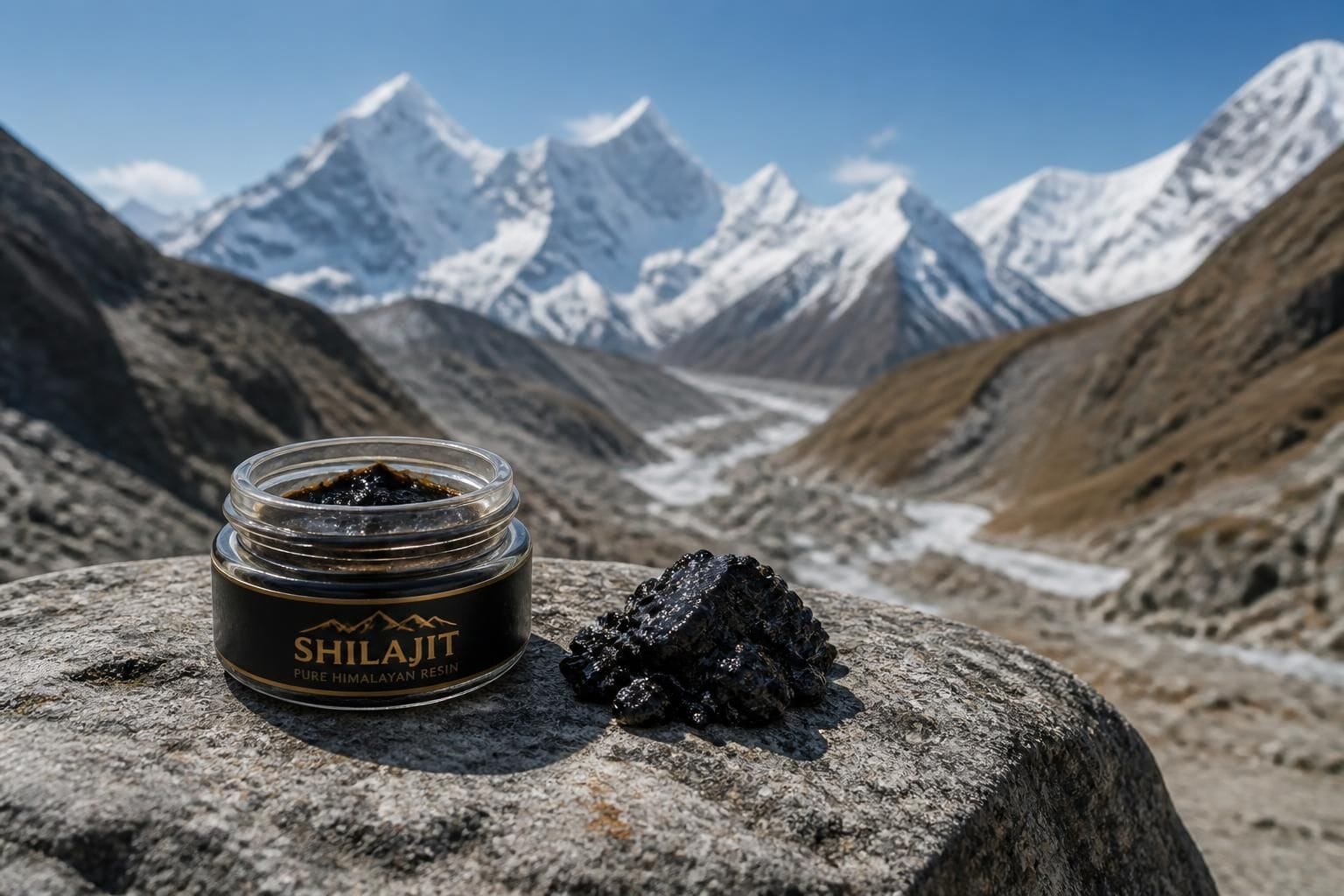
Shilajit is often described as a dark, sticky exudate naturally rich in organic matter transformed over time. It is collected in high-altitude areas, notably in the Himalayas, where cycles of heat, pressure, and plant degradation have produced a complex matrix. To deepen your understanding, you can consult this Shilajit presentation, useful to distinguish the traditional substance from industrial copies.
What makes it unique is its association between organic fractions and ionized minerals. This combination interests research because it may promote better biological assimilation than some isolated mineral salts. Key points include its composition and potential ability to support several systems at once, from cellular metabolism to recovery.
Millennia-long decomposition of plant matter under pressure
Geologically, Shilajit results from the slow decomposition of plant biomass trapped in rocks. Over centuries or millennia, pressure and temperature variations transformed this matter into an organo-mineral concentrate. This genesis explains its natural resin texture and variability depending on geographic origin.
This mode of formation also justifies caution regarding quality. A mountain-derived substance is not automatically safe for consumption. Without appropriate purification, environmental impurities may persist. Naturalness never replaces analytical control.
Role of bioavailable minerals in benefits for men
The presence of bioavailable minerals is often cited to explain part of the observed effects on vitality and cellular function. Magnesium, zinc, iron, and trace elements are involved in dozens of enzymatic reactions linked to energy, muscle contraction, and hormonal synthesis. In active or mature men, this metabolic dimension is far from trivial.
A practical point deserves emphasis: the benefits of a supplement do not reveal themselves in a vacuum. When diet is deficient, sleep disturbed, and stress chronic, the body responds less well. Shilajit appears especially interesting as support within a global well-being strategy.
Main bioactive components of Shilajit and their pharmacological roles
Three families especially attract attention: fulvic acid, dibenzo-α-pyrones, and the mineral fraction. Several reviews suggest antioxidant, adaptogenic, and metabolic properties. For a broader overview of uses, this dossier on the benefits of Shilajit provides a useful complement.
The word “adaptogen” is sometimes overused. Here, it refers to support of physiological adaptation to constraints, notably effort, fatigue, and stress. This does not mean a uniform action in all men, but rather a modulatory potential to be evaluated according to individual context.
Fulvic acid: powerful antioxidant and detoxification agent
Fulvic acid is the emblematic compound of Shilajit. It acts as a molecular carrier, possesses chelation properties, and participates in protection against certain oxidative imbalances. Its small molecular size has led several authors to examine its bioavailability and interaction with various nutrients. If you want to understand its exact role, this focus on fulvic acid offers an educational insight.
Practically, this fraction is often highlighted in standardized extracts. It could contribute to mitochondrial support and reduction of some free radical damage. The most useful message remains simple: a good Shilajit is also judged by the traceability of its fulvic acid content.
Dibenzo-α-pyrones: adaptogenic and energetic actions
Dibenzo-α-pyrones are less known to the general public, but several studies assign them a role in regulating cellular bioenergetics. They are frequently associated with an effect on perceived energy, exercise tolerance, and mitochondrial function. This is particularly interesting in overworked men.
Why does this dimension matter so much? Because male fatigue is not always related to a simple lack of sleep. Decreased cellular energy efficiency combined with excess stress can translate into slow recovery, lower motivation, and fluctuating endurance.
Androgenic and nootropic properties of Shilajit
The so-called androgenic properties relate to its potential influence on the male hormonal environment, notably testosterone. The nootropic effects concern attention, working memory, and resistance to cognitive fatigue. This dual interest explains why Shilajit attracts men during periods of professional or sports overload.
The more credible approach is to speak of functional support rather than hormonal miracle. When data are favorable, they show measured improvements in specific protocols, not a universal transformation. This nuance protects from disappointment and inappropriate use.
History and traditional use of Shilajit in Ayurvedic medicine
In the tradition of India, Shilajit has long been used as a general tonic. Ayurvedic texts integrated it into the category of deep support substances, with a special place for vigor, resistance to aging, and restoration of strength. This antiquity does not replace modern scientific assessment but provides a coherent usage framework.
The traditional perspective is not opposed to current research. Rather, it asks the right questions: vitality, endurance, libido, resistance to stress, recovery, mental clarity. These are precisely the axes studied today in modern men.
Shilajit as Rasayana: longevity elixir and male revitalizer
In Ayurveda, the term Rasayana refers to an approach of revitalization and preservation of physiological capital. Shilajit is often presented as support for functional longevity, with particular emphasis on male vigor. This traditional reading explains its reputation as a fortifying agent rather than a harsh stimulant.
This positioning is interesting for profiles aged 40 and over. Many do not seek a “boost,” but a more stable base: better recovery, less fluctuating libido, more constant concentration, and a better-preserved physical reserve feeling.
Traditional applications specific to male health
Historical uses often cite sexual vigor, fertility, endurance, and resistance to exhaustion. Male health is thought of globally here, with a close link among digestion, vitality, and reproductive power. This systemic view quite well matches the modern notion of metabolic terrain.
In current practice, Shilajit only makes sense if it fits into a coherent framework: regular sleep, adapted training, nutrient-dense diet, and reduction of stress. Without this, even an excellent product produces more modest effects.
Proven impact of Shilajit on testosterone and male hormonal health
Clinical studies on increase of total and free testosterone
The most cited study is that of Pandit et al., published in Andrologia in 2016. In this randomized, double-blind, placebo-controlled trial, 96 healthy men aged 45 to 55 received 250 mg of purified Shilajit twice daily for 90 days. The authors observed a significant increase in total testosterone, free testosterone, and DHEAS compared to placebo. Reference: “Effects of purified Shilajit on testosterone levels in healthy volunteers,” DOI available via academic databases.
This study does not allow affirming that all men will have the same response. However, it shows that a purified, standardized extract used for three months can favorably affect certain hormonal markers. The difference between belief and evidence begins precisely there, in protocol quality.
Study protocols: population, dosage, duration, and quantified effects
| Study | Population | Dosage | Duration | Main observation |
|---|---|---|---|---|
| Pandit et al., 2016 | 96 men, 45 to 55 years | 250 mg, 2 times/day | 90 days | Significant increase in total and free testosterone |
| Metabolic support studies | Active adults | 200 to 500 mg/day | 8 to 12 weeks | Possible improvement in vitality and exercise tolerance |
The most documented scheme for testosterone remains 500 mg per day, split morning and evening. This is a useful reference but not an automatic choice. In some men, notably with excess weight, sleep debt, or metabolic syndrome, hormonal response also strongly depends on life context.
Implications for hormonal decline in mature men
After 40 or 50, many notice a set of diffuse signals: decreased tone, loss of motivation for training, less clear recovery, and fluctuating libido. Shilajit can then be considered as support, especially if the goal is to accompany a better-structured lifestyle. It neither replaces biological assessment nor management of confirmed hypogonadism.
The best use is to integrate it after verifying basics: sleep, waist circumference, protein intake, physical activity, and stress management. Without this foundation, hormonal search often turns into chronic disappointment.
Contribution of Shilajit to overall male hormonal balance
Hormonal modulation is not limited to testosterone. Shilajit also seems to act on energy terrain, low-grade inflammation, and some markers of functional aging. This broader approach helps understand why some users describe mood, libido, and recovery improvement without spectacular visible variation in daily life.
Endocrine balance rarely builds around a single molecule. The body constantly adjusts priorities according to sleep, stress, effort, and nutritional reserves. Shilajit appears especially useful when it accompanies this rebalancing rather than claims to force it.
Role beyond testosterone: adaptive hormonal modulation
Research mentions an impact on DHEAS and overall resilience of the neuroendocrine axis. This can matter in men exposed to high professional pressure. When stress settles in, male hormonal terrain often becomes less stable, with decreased motivation and lighter sleep.
This adaptive reading is more realistic than the idea of a simple “booster.” A good supplement is judged as much by the quality of its diffuse effects as by the evolution of a number on a blood test.
Positive effects of Shilajit on male fertility: studies and mechanisms
Improvement of sperm count and motility
The subject of male fertility is often addressed too late, while sperm quality reacts to many factors: heat, smoking, inflammation, deficiencies, pollution, lack of sleep. On this terrain, available data on Shilajit are encouraging. An open study on infertile men reported improvements in total sperm count and their progressive motility after several weeks of supplementation with purified Shilajit.
Caution is warranted, as not all trials present the same methodological robustness. Nonetheless, the signal is consistent: a better oxidative and metabolic environment seems able to support fertility. In a couple planning conception, this perspective deserves to be discussed with a professional.
Rigorous clinical analyses and quantified results
In a frequently cited study by Shweta et al., infertile men receiving purified Shilajit for about 90 days showed improvement in sperm count and progressive motility, with a decrease in some oxidative damage markers. Figures vary across publications and formulations used, requiring careful reading of protocols.
A frequently cited quote in the literature is: “Purified Shilajit demonstrated spermatogenic activity in oligospermic males.” This formulation does not mean guaranteed pregnancy, but potential support of sperm function. In terms of fertility, this nuance is essential.
Biological mechanisms promoting sperm quality
Semen is particularly sensitive to oxidative stress. Sperm membranes, rich in polyunsaturated fatty acids, are vulnerable to oxidation. Shilajit, through its fraction rich in functional antioxidants and carrier compounds, could improve this biological terrain and preserve better cellular integrity.
Added to this is a mitochondrial dimension. Sperm motility depends on ATP production. If cellular energy support improves, better motility logically follows. That is why fertility never boils down to a simple lab figure.
Antioxidant role in sperm protection
In men exposed to pollution, overtraining, or chronic stress, oxidative damage can heavily impact sperm quality. Shilajit, particularly via fulvic acid, could reduce this oxidative pressure. This does not exempt quitting smoking or correcting harmful exposures, but complements a global strategy.
In real life, the best results often appear when multiple levers are activated together: better-controlled body weight, sleep, limited testicular temperature, moderate physical activity, and quality nutritional intake.
Influence on testicular hormone production
Testicular function depends simultaneously on gonadotrophins, inflammatory state, and energy availability. If Shilajit promotes a more favorable environment for hormone production, it can indirectly support spermatogenesis. This logic links testosterone and fertility without confusing them.
A man consulting for parental planning benefits from monitoring biological parameters rather than relying solely on feelings. Reproductive terrain deserves methodical support.
Interactive comparator
Shilajit Comparison Table for Men
Compare the main forms of Shilajit in French: resin, capsules, and powder, according to potential purity, ease of use, dosage, taste, price, and ideal profile.
| Form | Potential Purity | Ease of Use | Precise Dosage | Taste | Price | Ideal Profile |
|---|
Shilajit and male energy: mitochondrial stimulation and ATP production
Randomized trials on fatigue reduction and performance increase
Persistent fatigue is one of the most common reasons for Shilajit use. Several experimental studies and some human trials suggest an improvement in available energy, probably via mitochondrial function. Ghosal and colleagues were among the first to document the role of dibenzo-α-pyrones on cellular bioenergetics. Human clinical data remain less abundant than for testosterone, but the whole forms a plausible signal.
In active men, this action results less from nervous excitation than from better consistency. This is a crucial detail: useful energy is not agitation, it is the capacity to sustain effort then recover without collapsing.
Analysis of studied protocols and populations
Protocols generally include healthy adults, sometimes athletes, with doses of 200 to 500 mg per day over 8 to 12 weeks. Observed criteria concern fatigue, perceived effort, certain muscle markers, and performance on physical tasks. Effects vary, but a favorable trend appears especially when the product is standardized and subjects maintain a stable lifestyle.
In other words, someone who sleeps 5 hours, accumulates stress, and expects transformation in ten days is likely to be disappointed. Mitochondrial support is better measured over time.
Daily vitality optimization in active men
An executive training early in the morning, chaining meetings, commutes, and busy days does not necessarily need an extra stimulant. He mainly needs better overall energy efficiency. That is where Shilajit makes sense, as support for cellular energy and physical availability.
The sought benefit is often very concrete: less afternoon slump, clearer mind during training, more stable mood, deeper reserve sensation. These effects are modest in some, marked in others, but follow a credible physiological logic.
Impact on physical and mental endurance
Endurance concerns not only sport. Sustaining a demanding day without cognitive collapse, managing family responsibilities, and staying operational at work also fall under endurance. Shilajit could therefore support a more durable energy, physical and mental alike.
For those also watching weight, this topic needs precision: better tone can facilitate physical activity, but Shilajit is not a slimming product per se. For this specific point, this analysis on Shilajit and weight loss helps set expectations properly.
Role of Shilajit in improving muscle mass and sports recovery
Anti-inflammatory effects related to muscle effort
After intense training, muscle undergoes normal micro-lesions. The question is not to eliminate all inflammation but to avoid excessive and costly inflammation. Studies on Shilajit mention a reduction in some markers of muscle damage, with an interesting effect on perceived recovery.
For men practicing weight training, endurance sports, or combat sports, this can make the difference between continuous progress and accumulated fatigue. Recovery is often the real performance field, much more than the session itself.
Scientific data on reduction of soreness and pain
A pilot study suggested that Shilajit could mitigate the increase of some markers linked to muscle lesions after eccentric effort. Data are still limited but lean toward support for tissue rebuilding and less soreness sensation in some subjects.
We remain nuanced: this does not replace sufficient protein intake or training planning. Shilajit acts as a complementary lever, not as an excuse to accumulate poorly recovered sessions.
Anabolic potential and support for muscle rebuilding
The word “anabolic” must be handled carefully. Here, it concerns indirect support via improvement of testosterone, mitochondrial energy, and recovery. In a seriously training man, this can contribute to a more favorable environment for muscle progression.
Best responding profiles are often those already maintaining proper discipline. Well-chosen supplementation rarely amplifies incoherent lifestyle but can consolidate a good foundation.
Synergies with intensive male training
Shilajit seems particularly relevant during cycles where volumes increase: preparation for a half-marathon, strength phase, resumption after a break, or very busy professional period. It can help support physical availability without falling into daily stimulant logic.
On the ground, many men appreciate the resin form for this aim, as it allows flexible dosing. Others prefer capsules for precision. The best format remains the one you use regularly with consistency and discernment.
Neuroprotective and nootropic properties of Shilajit for stressed men
Improvement of concentration and male cognitive memory
When mental load increases, many men do not first describe physical fatigue but decreased sharpness. Difficulty concentrating, less fluid working memory, impression of being “full.” Shilajit interests for its potential to support cognitive function, notably via effects on cellular metabolism and oxidative balance.
Preclinical studies suggested interest in neuroprotective processes. Even if clinical trials remain modest, the signal is coherent enough to justify interest in highly mentally solicited profiles.
Clinical trials on mental fatigue and intellectual performance
Human studies are fewer than on other axes. However, some observations report better resistance to mental fatigue and increased clarity sensation after several weeks. Men combining screen work, poor recovery, and high stress probably perceive this effect fastest.
Caution remains the rule: a supplement will not alone correct chronic overload. But when added to a better lifestyle rhythm, the gain can become noticeable daily.
Underlying neurobiological mechanisms
The brain is energy-demanding. Any molecule capable of improving mitochondrial efficiency or limiting certain oxidative damages can, at least theoretically, support cognitive functions. Shilajit sits precisely at this interface between cell metabolism and tissue protection.
This biological coherence explains why some users mention a “clearer” effect without excessive nervousness. It is a different response than with classic stimulants.
Protective effect against cerebral oxidative stress
Fulvic acid has been the subject of interesting hypotheses on neuronal protection. Some authors mentioned its role in modulating protein aggregation and oxidative environment. In men subjected to chronic stress, this neuroprotective angle makes sense, even if clinical applications still require confirmation.
The most honest point is to speak of support potential, not therapeutic promise. This restraint strengthens the credibility of the message.
Adaptogenic actions on the central nervous system
The central nervous system strongly reacts to excessive demands, lack of sleep, and ongoing stress. Shilajit could improve functional resilience by reducing the biological cost of this overload. Some men then describe a more stable mood, less irritability, and a better sense of control.
In a well-being logic, this effect is often more valuable than a simple performance gain. Feeling more stable also means better decisions and recovery.
Cardiovascular protection by Shilajit: a major advantage for male health
Regulation of blood lipids and prevention of heart diseases
Cardiovascular prevention particularly concerns men from their forties, especially in case of abdominal fat, sedentary lifestyle, or high professional pressure. Some data suggest Shilajit could help modulate blood lipids and limit some consequences of oxidative stress. This is support, not treatment for dyslipidemia.
This perspective interests because male vitality is not just libido or testosterone. Without good metabolic and vascular health, overall performance ultimately declines.
Clinical studies on cholesterol and triglycerides
| Parameter | Effect observed in some studies | Level of evidence |
|---|---|---|
| Total cholesterol | Tendency to improvement depending on formulation and profile | Moderate |
| Triglycerides | Possible reduction in some metabolic contexts | Moderate |
| Exercise tolerance | Indirect support via cellular energy | Emerging |
These results must be put in context: diet, activity, weight, genetics. The supplement does not replace a cardiovascular prevention strategy. However, it can strengthen a coherent approach.
Prevention of cardiovascular lesions by antioxidant properties
Oxidative stress contributes to vascular alteration and endothelial dysfunction. Shilajit, through its protective compounds, could participate in better preservation of exposed tissues. Good blood circulation remains a discreet but central pillar of male performance, from endurance to sexual function.
This potential benefit gains value when combined with smoking cessation, regular walking, and sleep control. Effective prevention is always cumulative.
Implications for male cardiovascular longevity
Male longevity is not only about lifespan but quality of life. Preserving the cardiovascular system means maintaining autonomy, mobility, effort reserve, and more stable cognitive function. In this light, Shilajit appears as one possible adjunct among others.
This broader view avoids the common mistake of seeking only an effect on testosterone. Durable vitality is built first on fundamental health.
Natural management of male stress and anxiety thanks to Shilajit
Adaptogenic role for better resilience to daily stress
Chronic stress drains more than it worries. It eats into sleep, degrades mood, slows recovery, and weakens hormonal balance. This is one reason why Shilajit appeals to so many active men. Its adaptogenic profile can help better handle daily constraints without overstimulation.
A 48-year-old father, sales executive, for example described a simple yet telling change after a few weeks: “less irritability in the evening and more room.” This type of feedback does not replace studies but illustrates what many men really seek.
Studies on modulation of stress hormones (cortisol)
Direct data on cortisol in men supplemented with Shilajit remain limited. In contrast, improvement of overall adaptive response, tone, and recovery suggest indirect modulation of the neuroendocrine terrain. When stress decreases, sleep quality and motivation often follow the same trajectory.
The good habit is to observe simple markers: sleep, irritability, recovery, concentration, effort tolerance. These often reveal the most useful evolution.
Clinically observed effects on anxiety and mental well-being
Some users report a calmer, more stable feeling, less nervous tension, and better capacity to stay productive under pressure. The key word here is not sedation but regulation. Shilajit should not make one “sluggish,” ideally it helps preserve smoother functioning.
In a well-being approach, this effect can count as much as the gain in energy. A rested and more centered man often gets more benefits from training, work, and relational life.
Testimonials and observations in male populations
45+ profile: decreased motivation, light sleep, slow recovery, progressive improvement of daily stability.
Athletic profile: nervous fatigue during load periods, better reserve feeling, and less “emptying” after heavy weeks.
Overworked profile: accumulation of stress, scattered attention, impression of more regular mental clarity after 4 to 8 weeks.
These observations remain field feedback. They gain value when linked to purified product, coherent dosage, and followed lifestyle.
How to use Shilajit to fully benefit from its male virtues
Different available forms: resin, capsules, powder
Shilajit mainly exists as resin, capsules, and powder. Resin is often the most appreciated form by connoisseurs, as it is less processed and allows fine adjustment. Capsules offer excellent practicality. Powder, rarer in good quality, requires increased vigilance on traceability.
Regarding storage, a simple point avoids many errors: heat, humidity, and prolonged exposure alter perceived quality. On this subject, this guide on storing Shilajit gives concrete benchmarks.
Advantages and limits of each form for male health
Resin often allows sensing product quality more clearly, but its earthy taste does not please everyone. Capsules facilitate compliance and precise dosage. Powder may suit if from a rigorous manufacturer but is more exposed to purity doubts.
For a man who travels often or wants a stable protocol, capsules are practical. For an experienced user prioritizing authenticity, resin keeps solid arguments.
Recommended dosages according to goals: testosterone, fertility, energy, performance
The most documented dosage for testosterone is 250 mg twice daily of purified extract. For fertility and energy, observed protocols often range from 200 to 500 mg per day for 8 to 12 weeks. Many start lower the first week to assess tolerance.
What matters is not increasing quickly but using a credible dose over sufficient duration. A too short cure often leads to poorly calibrated expectations.
Scientifically documented usage protocols
The most solid framework remains regular daily intake for at least two to three months. For hormonal or fertility goals, this window seems more realistic than a fifteen-day trial. Evaluation should ideally rely on objective benchmarks: fatigue, libido, recovery, and biological tests if necessary.
Tracking sensations remains useful but gains reliability when accompanied by concrete observations. This way, placebo effect and unjustified disappointment are avoided.
Tips to optimize Shilajit assimilation and effectiveness
Shilajit is often taken on an empty stomach or between meals, dissolved in warm water when in resin form. Some tolerate it better with a small light meal. The goal is simple, regular intake compatible with your rhythm, as consistency remains the primary efficacy factor.
Basic lifestyle hygiene significantly enhances results:
7 to 8 hours of sleep when possible;
sufficient intake of proteins and micronutrients;
regular physical activity, without overtraining;
reduction of alcohol and tobacco;
Stress management through breathing, walking, or active recovery.
Intake mode according to male metabolism
Highly nervously stimulated men sometimes prefer intake in the morning and early afternoon. Those mainly seeking hormonal support and recovery often choose morning and evening. There is no universal rule but rather adaptation to lifestyle, digestion, and individual sensitivity.
The best protocol is one that remains tolerable, sustainable, and coherent with the goal. At this level, regularity often outweighs sophistication.
Choose a purified and secure Shilajit for optimal male health
Authenticity criteria and reliable geographical origin
A credible Shilajit must show clear origin, documented purification, and laboratory analyses. The Himalaya regions are historically linked to best references, but origin alone is not enough. What matters is the combination of origin, purification, and independent control.
To compare selection benchmarks, a specialized resource on Shilajit can help distinguish marketing and truly useful criteria. Trust is built first on analytical evidence.
Importance of purity tests and absence of contaminants
Analyses must seek heavy metals, microbiological contaminants, and sometimes residual solvents. This is a non-negotiable point. Poorly controlled products can turn a well-being approach into avoidable health risk.
Ideally request recent, readable certificates consistent with the sold batch. A seller unable to provide proof of purity does not offer minimal security expected on a health subject.
Risks related to use of uncontrolled products
The main danger is not purified Shilajit but dubious products. Raw material may be contaminated with heavy metals, molds, or other pollutants. The problem is especially serious as some consumers take these products for weeks or months.
The right question is therefore not “which is cheapest?” but “which is most transparent?” In natural health, traceability remains true luxury.
Examples of toxic contaminants and their consequences
Possible contaminants include lead, arsenic, mercury, or microbial contaminants. Their potential effects range from digestive troubles to more serious impacts on nervous, renal, or hepatic systems in repeated exposure. This risk alone justifies demanding selection.
A quality natural supplement is chosen as a health product, not an exotic curiosity. This discipline changes everything.
Precautions and contraindications of Shilajit in men
Potential side effects and documented drug interactions
Purified Shilajit is generally well tolerated at usual doses. Yet, some men report mild digestive troubles, a sensation of warmth, or slight nervousness during the first days. This justifies starting gradually. Possible interactions mainly concern situations where treatment already affects blood sugar, blood pressure, or hormonal balance.
In case of cardiovascular history, gout, hemochromatosis, kidney disease, or complex treatment, prior medical advice is preferable. A cautious approach protects better than misdirected enthusiasm.
Recommendations for specific pathologies and medical consultations
A man presenting marked libido decrease, deep fatigue, or known infertility should not limit himself to prolonged self-medication. An assessment may be necessary to exclude thyroid disorder, severe deficiency, sleep apnea syndrome, early diabetes, or true testosterone deficiency.
Shilajit’s role takes full value when inserted into a coherent medical reading. This is how natural, safety, and measured efficacy combine.
Advice for responsible and safe use of Shilajit
Some simple rules avoid most errors: choose a tested brand, start low, respect duration, avoid unnecessary mixes initially, and observe response. If an unusual effect appears, suspension and medical advice remain the appropriate reflex.
The ideal supplement is not the one promising most but the one integrating smoothly into your reality. This sobriety often makes the best routines.
Clinical monitoring during first intake
During the first two weeks, it is useful to monitor three indicators: digestion, sleep, and energy level. In some men, slight dose adjustment suffices to improve tolerance. In others, absence of interest after a well-run cure simply leads to reevaluate the goal or the product.
This logic of observation avoids hasty judgments. In natural health, method matters almost as much as substance.
Typical testimonials: concrete male experiences with Shilajit
Mature men and hormonal recovery with Shilajit
Take the case of a 52-year-old man, technical executive, occasional athlete, complaining of decreased tone, laborious recovery, and less stable libido. After reorganizing sleep, reducing alcohol on weekdays, and regular intake of purified Shilajit for 12 weeks, he reports more consistent physical motivation. His panel shows moderate progress in total testosterone, without spectacular change but with clearly improved experience.
This kind of case well illustrates field reality: Shilajit’s interest often appears in cumulative details. A more stable daily life sometimes counts more than excessive expectations.
Clinical cases and observed improvements
In mature profiles, the most frequent changes concern recovery, end-of-day energy feeling, less fragmented sleep, and sometimes libido improvement. When these effects accompany better training and better-controlled weight, the circle becomes virtuous.
The decisive point remains realism: Shilajit can support a trajectory, rarely compensate alone for years of imbalance.
Athletes: improved performance and facilitated recovery
For a 38-year-old man preparing for an amateur triathlon season, the complaint was not lack of will but residual fatigue. After two months of regular intake, he describes “less empty legs” during busy weeks and better training continuity. Subjective recovery markers improve without undesirable stimulating effect.
This scenario is typical of the already disciplined athlete. Shilajit then seems to play a smart support role, not an artificial shortcut.
Stories and returns on energy investment
“Investment” is well chosen: many men judge a supplement by its ability to make days more livable. When the sensation of energy becomes more regular, the benefit spills over into training, work, and family life. This is often where perceived return becomes most concrete.
A good supplement is sometimes noticed less by a peak than by progressive disappearance of troughs. This difference changes everyday life.
Managing male chronic fatigue with Shilajit
In men exposed to non-specific chronic fatigue, Shilajit may have a place after medical evaluation, especially when major red flags have been ruled out. Some describe slow but steady improvement in overall tone, motivation, and mental clarity. Others perceive only modest effect. This variability is normal.
The best approach remains to objectively observe sleep, fatigue level, mood, and weekly activity. When evolution is positive, it quickly becomes visible on quality of life.
Authentic testimonials and impact on quality of life
Most convincing feedback does not talk only of strength or libido. They also evoke a more available presence with loved ones, less “fog” after lunch, better emotional stability, and a feeling of taking back control. These are sober but deeply useful benefits.
For many men, the challenge is not doing more but feeling better. This is precisely the line along which Shilajit deserves to be evaluated, with method and measure.
How long does it take for Shilajit to act in men?
The first subjective effects on vitality or recovery may appear in 2 to 4 weeks, but the most solid protocols on testosterone and fertility extend rather over 8 to 12 weeks. Regular intake with a purified product is crucial.
Is resin better than capsules?
Resin is often seen as more authentic and less processed, but capsules offer precise dosage and excellent practicality. The best choice mainly depends on product purity, standardization, and your regularity of use.
Does Shilajit necessarily increase testosterone?
No. Studies showed significant testosterone increase in some men with a precise protocol, but the response varies according to age, lifestyle, sleep, stress, and general health. Medical assessment remains useful if symptoms are marked.
Can Shilajit be used for fertility planning?
Shilajit shows potential interest on sperm quality according to several studies, but it does not replace fertility assessment nor evaluation of other male and female factors. In conception planning, it is ideal to integrate it into a coherent medical and hygieno-dietetic strategy.
What is the main risk with a bad Shilajit?
The major risk comes from unpurified or poorly controlled products, which may contain heavy metals or other contaminants. That is why it is necessary to favor clear origin, laboratory analyses, and transparent purification.

As a wellness consultant with over 10 years of experience, I help individuals and businesses incorporate natural health practices to improve their quality of life on a daily basis.