
In Brief
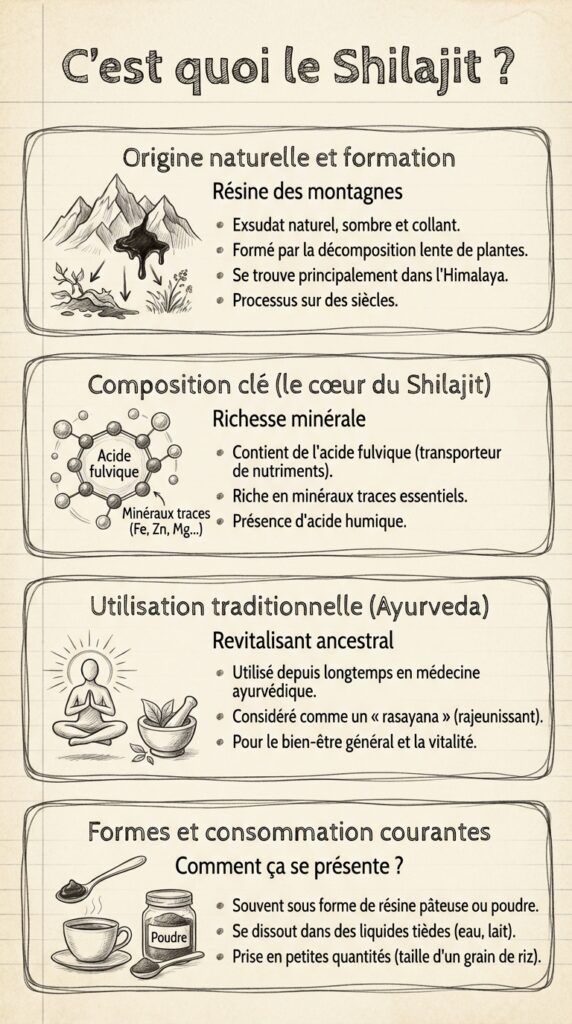
- Shilajit is a dark mineral resin mainly found in high mountains, especially the Himalayas, and has long been used in Ayurvedic medicine.
Its best-known compounds are fulvic acid and humic substances, which may explain interest in energy, recovery, and cellular protection.
Claims around shilajit include support for testosterone, vitality, bone health, altitude adaptation, and cognitive aging, but human evidence remains limited.
Raw shilajit may contain contaminants such as heavy metals, microbes, and toxins, so purified and tested products are important.
Potential side effects, health contraindications, and uncertain dosing make medical supervision essential before any supplement routine.
Shilajit has rapidly moved from mountain folklore and classical Sanskrit texts into modern wellness conversations. It is often described as a black, sticky, resin-like substance that oozes from rocks in high-altitude regions after long cycles of heat, pressure, and organic decomposition. This origin alone has sparked fascination. Yet the real reason shilajit draws attention is simpler: it lies at the intersection of traditional herbal practice, mineral nutrition, and emerging biochemical research.
For many readers, the key question is not whether shilajit is ancient or trendy. It is whether this unusual natural supplement truly deserves its reputation. Traditional systems, especially Ayurvedic medicine, have defined it as a rejuvenating substance associated with endurance and longevity. Modern studies explore its potential impact on oxidative stress, mitochondrial function, cognition, fertility, and adaptation to physical exertion. The promise is intriguing. The evidence, however, remains preliminary. This tension is what makes the topic worth close examination.
Many therapeutic properties have been attributed to it, a large proportion of which has been verified by modern scientific evaluation.1
What is Shilajit? Understanding the Natural Resin of the Himalayan Mountains
Origins and Formation of Shilajit, This Black Sticky Resin
Shilajit is a natural tar-like exudate mainly associated with the Himalayan range, although it has also been identified in other mountainous regions such as Altai, the Caucasus, and Gilgit-Baltistan. It forms over centuries through the decomposition of plant matter and microorganisms trapped in rock layers. Seasonal heat helps this material soften and exude, creating the dark resin harvested for use.
Its appearance can be striking. High-quality shilajit is typically dark brown to black, sticky when warm, and has a strong earthy odor. Because geography, altitude, local vegetation, and processing all influence composition, no raw sample is exactly the same as another. This natural variability is one reason why quality control is so important. The mountainous origin may seem romantic, but chemistry determines the value.
Historical Use of Shilajit in Ayurvedic Medicine for Health and Longevity
In traditional practice, shilajit has been considered a rejuvenating substance often associated with resilience, recovery, and healthy aging. Classical Ayurvedic medicine texts describe it as supporting strength, vigor, and internal balance. Practically, it has often been used in formulas aimed at fatigue, convalescence, and age-related decline.
This historical use is meaningful but does not replace modern testing. Traditional systems offer context, accumulated observations, and therapeutic logic. Clinical science asks other questions: which compounds are active, how consistent are preparations, and what measurable effects on humans are shown? This bridge between heritage and evidence defines the current story of shilajit.
What do you really know about Shilajit?
Test your understanding of benefits, safety, evidence, and smart supplement choices.
Loading quiz…
Bravo!
Why this quiz is important
This quiz helps readers distinguish promising mechanisms from proven clinical results.
It also reinforces safety basics: purified products, third-party testing, and cautious use in vulnerable groups.
Main Bioactive Compounds of Shilajit: Exploring Fulvic Acid and Humic Acid
Antioxidant and Anti-Inflammatory Roles of Fulvic Acid for Health
The most discussed component in shilajit is fulvic acid. This family of small organic molecules is thought to help transport minerals and participate in redox reactions. Researchers focus on fulvic acid because it appears to have antioxidant activity and might influence cellular responses related to inflammation. In the lab, these properties suggest a possible protective role against oxidative stress.
This sounds impressive, but context is important. A promising mechanism is not proven therapeutic evidence. Human metabolism is more complex than a Petri dish. Still, fulvic acid remains a major reason why shilajit is studied in wellness and sports recovery circles. When you hear about cellular protection or resilience to stress, this chemistry often underpins the claim.
Potential Cognitive Benefits of Shilajit via Action on Tau Protein Aggregation
One of the most discussed areas is brain health. Some researchers have proposed that fulvic acid in shilajit might interact with processes involved in tau protein aggregation, a feature associated with neurodegenerative disorders, including Alzheimer's disease. This has made shilajit a topic of interest in discussions on healthy cognitive aging and neuronal protection.
For readers concerned about their aging parents, this theme naturally attracts attention. The idea that a traditional resin could influence protein misfolding is appealing. Yet informed readers must differentiate biochemical plausibility from established clinical benefit. Early results can guide research but should not be taken as proof.
Shilajit Influence on Alzheimer’s-Related Brain Changes
Laboratory work has suggested that fulvic acid might reduce abnormal tau assembly under certain conditions. Theoretically, this could help limit some brain changes linked to Alzheimer’s. Some authors have also mentioned broader neuroprotective pathways, including mitochondrial support and reduction of oxidative load. This is where the antioxidant narrative around shilajit becomes especially visible.
However, these are mainly mechanistic observations. They explain why researchers are interested but not why one should expect a direct clinical outcome. The key is measured optimism: interesting signals exist, but they are far from definitive.
Limits of Current Scientific Evidence on Cognitive Effects
Human cognitive trials are limited in number and size. Many reports rely on animal models, in vitro experiments, or indirect markers rather than meaningful long-term outcomes like memory preservation, daily autonomy, or disease prevention. This makes it difficult to know shilajit’s real-world performance.
That is why anyone considering a supplement for brain health should view shilajit as experimental rather than established. It merits ongoing attention, but stronger clinical trials are needed before supporting bold claims.
Scientific View of Humic Acid in Shilajit Supplements
Alongside fulvic acid, shilajit contains humic compounds, including humic acid. These larger molecules are less mentioned in mainstream marketing, yet they contribute to the resin’s chemical profile. Humic acid has been studied for its mineral interactions, roles in biological signaling, and possible effects on gut and immune pathways, though evidence remains uneven.
In commercial preparations, the balance of fulvic acid, humic acid, trace elements, and processing residues can vary strongly. This means one supplement can differ significantly from another. If a label highlights standardized fulvic acid content and third-party tests, that generally provides a clearer starting point for evaluation.
Compound | Why It’s Important | Evidence Level |
|---|---|---|
Fulvic acid | Mineral transport, oxidative stress research, possible neuroprotective interest | Preliminary to moderate, depending on goal |
Humic acid | Broader humic activity, mineral interactions, possible immune relevance | Preliminary |
Trace elements | May contribute to altitude, vitality, and recovery claims | Context-dependent and variable |
Benefits and Controversies Linked to Shilajit Use
Shilajit’s Role in Increasing Testosterone and Male Fertility
Among the most marketed claims, shilajit is often linked to increased testosterone and improved reproductive health. Some small human studies have suggested purified shilajit may support testosterone levels in some men. It has also been explored in sperm quality contexts, which explains its presence in discussions on male infertility.
However, the research base remains modest. Small sample sizes, variability in preparations, and short durations make broad conclusions difficult. A practical rule applies here: when a natural supplement is sold as a hormonal shortcut, caution beats exaggeration.
Energy Boost and Mitochondrial Support to Combat Chronic Fatigue
Many users turn to shilajit for its energizing effect rather than hormonal. This is not surprising. Some research suggests shilajit may support mitochondrial function, the cellular machinery involved in energy production. This has sparked interest in chronic fatigue states, intense training periods, and demanding work routines.
A useful way to consider this is as support, not stimulation. Unlike a strong stimulant, shilajit is generally presented as a foundational supplement for resilience. Some people also appreciate its magnesium content relative to stress and recovery, although evidence for stress relief remains indirect.
Cellular Protection, Iron-Deficiency Anemia Relief, and Bone Health Support
Emerging research has examined whether shilajit could help protect cells against oxidative damage. Separate small studies have also looked at blood parameters relevant to iron deficiency anemia. Because some preparations contain iron and may affect its metabolism, there is interest in whether shilajit could support individuals with low iron status. This remains a cautious, case-by-case question, not a universal recommendation.
Bone health is another area of curiosity, especially in postmenopausal women. Some preliminary results suggest shilajit may support markers related to bone strength and connective tissue integrity. This is an intriguing lead but still requires better-designed trials before making solid claims.
Potential Effects of Shilajit on Altitude Sickness and Immune Modulation
Because shilajit originates from high-altitude regions, it is often linked to mountain adaptation. Traditionally, its use is connected to relief of symptoms related to altitude stress, including fatigue and general weakness. Its mineral content has been cited as a possible explanation, but evidence remains limited.
Researchers have also suggested possible immunomodulatory effects. Simply put, shilajit might influence the behavior of immune signals. This does not mean it “stimulates” the immune system in a simple way. A better formulation is that it might help modulate certain pathways, but stronger human evidence is required.
Early Discoveries on Antiviral and Anticancer Effects
Laboratory work has sparked interest that shilajit or its fractions might exhibit antiviral or anticancer activity. These findings are early and mainly experimental. Lab cells do not capture the complexity of the human body, disease progression, dosage, or long-term tolerance.
When headlines turn these studies into spectacular promises, nuance disappears. The most responsible reading is this: shilajit contains compounds worthy of study but should not be presented as a one-stop solution for serious diseases.
Assessment of Scientific Validity and Need for More Clinical Trials
The pattern of benefits is consistent. Promising mechanisms exist. There are some encouraging pilot studies. Yet the clinical base remains incomplete. This is true for vitality, cognition, fertility, anemia support, and altitude resilience.
Prefer purified shilajit rather than raw resin.
Prefer a supplement with third-party testing and standardized composition.
Consider bold claims as marketing unless backed by human trials.
The enthusiasm around shilajit is understandable. The disciplined response is to remain open-minded while demanding better research. This balance protects both curiosity and common sense.
Safety, Side Effects, and Responsible Use of Shilajit Supplements
Risks of Raw Shilajit: Heavy Metals, Toxins, and Microbial Contaminants
Raw shilajit may contain heavy metals, fungal material, environmental toxins, and microbial contamination. This is one of the most important points in the entire discussion. A natural mountain resin is not automatically clean. Without purification, concerns about toxicity are real.
The variability of shilajit depends on its origin and processing. Two samples may differ in mineral profile, purity, and contaminant load. That is why the romance associated with “wild raw resin” must never override product testing.
Importance of Purified, Laboratory-Tested Products by Reputable Manufacturers
Because these products are sold as dietary supplements and are not regulated by the FDA like drugs, independent testing becomes central. Certificates of analysis, contaminant screening, and clear traceability help improve safety. Reputable manufacturers must be transparent about purification methods, heavy metal controls, and active compound levels.
The following table offers a practical screening guide.
To Check | Why It’s Important |
|---|---|
Third-party lab report | Helps verify purity and contaminant tests |
Purified preparation | Reduces risks associated with raw shilajit |
Standardized content | Improves consistency, especially for fulvic acid |
Clear label contraindications | Supports safer decision-making |
Known Side Effects and Contraindications for Vulnerable Populations
Reported side effects may include headaches, dizziness, gastrointestinal troubles, and possible hormonal fluctuations. If allergic reactions or concerning symptoms occur, stopping is advised. In real use, these side effects may relate to dose, purity, or individual sensitivity.
Certain groups should avoid shilajit unless directed by a qualified professional. This includes people with sickle cell anemia, hemochromatosis, thalassemia, heart diseases, blood sugar disorders, or autoimmune diseases. Children, pregnant or breastfeeding women, and anyone concerned about pregnancy-related exposure should avoid it due to insufficient data. A traditional substance can even pose modern problems when used lightly.
Forms, Dosage Recommendations, and Medical Advice
Shilajit is commonly sold as resin, powder, capsules, and liquid extracts. Resin is often considered the most traditional form, while capsules and powders offer convenience. There is no universal dosing standard, and appropriate dose depends on preparation strength, health status, and intended use.
Before starting shilajit, it is recommended to discuss with a healthcare professional, especially if taking medications or having chronic diseases. This is important not only for interactions but also to choose a reliable product and monitor side effects. Used cautiously, shilajit can be an interesting natural tool. Used lightly, it risks becoming an increasingly confusing rather than enlightening trend.
Is shilajit equivalent to a vitamin-mineral supplement?
Not exactly. Shilajit is a complex natural resin containing minerals, humic substances, and especially fulvic acid. It is sold as a supplement, but does not equate to a simple multivitamin.
Can shilajit really improve energy?
Possibly, but evidence is still emerging. Shilajit is studied for mitochondrial support and recovery, which might explain why some people report better endurance. This does not guarantee the same effect for all users.
Why is purified shilajit so important?
Raw shilajit can contain heavy metals, microbes, and toxins. Purified products tested in laboratories by reputable manufacturers reduce contamination risks and ensure more reliable composition.
Who should avoid shilajit?
People with iron overload, blood disorders like sickle cell anemia or thalassemia, heart diseases, blood sugar disorders, autoimmune diseases, as well as pregnant, breastfeeding women or minors should avoid shilajit unless medically advised.

As a wellness consultant with over 10 years of experience, I help individuals and businesses incorporate natural health practices to improve their quality of life on a daily basis.