
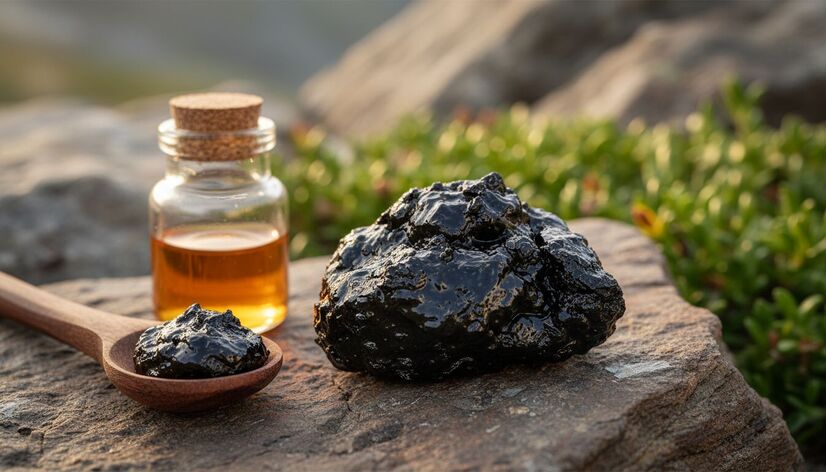
Discover Shilajit, this black resin with multiple benefits
Shilajit intrigues because it lies at the crossroads of traditional medicine, modern research, and very current expectations around energy, vitality and overall health. This dark resin from the mountains is often presented as a natural treasure rich in minerals, fulvic acid, and humic compounds. Behind this fascinating image, one point deserves to be noted right away: the product’s interest exists, but it must always be separated from folklore, exaggerated promises, and advertising hype often seen on the internet.
The site Shilajit Essentials aims precisely to clarify this subject methodically: understand the origin of this substance, analyze its potential benefits, know how to use it, learn to recognize serious quality, and spot the essential precautions before considering this dietary supplement. For anyone curious about natural well-being, whether athletic, active, or simply cautious about trends, the topic deserves to be explored without naivety. The question is not only what shilajit promises, but especially what it can reasonably provide when well chosen, well dosed, and used with discernment.

Shilajit: origin, formation, and fascination around a natural treasure
Shilajit is often nicknamed the black gold of the mountains. This image is more than just a marketing argument. Its dark, sticky matter when warm comes from high-altitude zones such as the Himalayas, but also from other mountain ranges in Central Asia. Over the centuries, plant and microbial matter degrade, compact, then undergo long transformations under the effect of pressure, terrain, and thermal variations. During warm periods, this substance can ooze on rock surfaces, where it is harvested before purification.
This natural story partly explains the lasting fascination it arouses. In Ayurvedic traditions, this resin was associated with longevity, strength, and recovery. Classical texts describe it as a substance supporting internal balance. This antiquity alone does not prove its modern effectiveness, but it shows why the product has passed through generations. A material used for centuries naturally draws curiosity when it reappears in contemporary well-being debates.
Reality, however, is more subtle. Not all shilajits are alike. Altitude, geographic zone, local flora, and processing methods influence the final composition. It is precisely for this reason that a clear guide like this content on what shilajit is can help distinguish the authentic story from a mere seductive label.
Why this resin attracts so much attention today
The comeback of shilajit in current conversations is linked to a deep trend: many readers seek natural solutions but now reject vague approaches. They want to understand the composition, safety, and concrete uses. Shilajit answers this curiosity because it combines ancient heritage and modern biochemical interest. Its main compounds, especially fulvic acid, are studied for their potential role in mineral transport, oxidative balance, and cellular protection.
In real life, interest often arises from a concrete situation. An amateur athlete preparing for a triathlon, a person tired after intense weeks of work, or a 50-year-old reader wanting to preserve their fitness may encounter shilajit with the idea of foundational support, less harsh than a classic stimulant. This expectation is understandable. It explains why this resin is gradually becoming a central subject in natural and reasoned performance worlds.
The key point remains the following: the mountain origin is dreamy, but only a serious reading of the composition and quality allows evaluating its true value.
Understanding the history is not enough. To judge the product’s real interest, one must enter its chemistry and what science begins to observe cautiously.
Benefits of Shilajit: energy, vitality, antioxidant, and limits of evidence
The benefits attributed to Shilajit often revolve around a few axes: energy, recovery, cognitive support, adaptation to physical stress, and the impression of better vitality. These potential effects are generally linked to its richness in minerals, humic substances, and fulvic acid. The latter concentrates much scientific attention. It is the subject of hypotheses on antioxidant activity, oxidative stress, and certain cellular mechanisms related to mitochondria, the little power plants present in cells.
A frequently cited study in humans, published in Andrologia, observed that purified shilajit administered for 90 days was associated with an increase in certain hormonal parameters in healthy men. Reference: Pandit et al., 2016, https://pubmed.ncbi.nlm.nih.gov/26395129/. The result is interesting, but it does not justify transforming the product into a universal hormonal solution. The sample sizes remain modest and the results must be confirmed.
Another highlighted area: the brain. Researchers have discussed the potential role of fulvic acid in mechanisms related to tau protein aggregation, known in neurodegenerative disease research. A publication in the International Journal of Alzheimer’s Disease helped popularize this hypothesis: Carrasco-Gallardo et al., 2012, https://pmc.ncbi.nlm.nih.gov/articles/PMC3296184/. The phrase often repeated in analyses is cautious: data suggest potential, not an established treatment.
What the general public can reasonably expect
For most users, the most realistic perception is of gradual support rather than a spectacular effect. This particularly concerns:
- a more stable feeling of energy in some people
- recovery during periods of physical or mental load
- mineral intake within an overall lifestyle hygiene logic
- potential antioxidant support, to be interpreted with moderation
A typical case illustrates this nuance well. An active adult who sleeps poorly, eats irregularly, and counts on a supplement to correct all imbalances is likely to be disappointed. Conversely, a person with a stable routine, coherent diet, and cautious use may better perceive the interest of a well-formulated product. Shilajit does not act like a magic wand; it fits into a context.
To go further on the most discussed molecule, this explanation on fulvic acid helps better understand why this component holds such an important place in scientific and commercial discussions.
The right reflex is to keep this guideline in mind: the signals are serious enough to deserve attention, but not strong enough to allow absolute promises.
When a natural supplement becomes popular, the real question is no longer just its theoretical interest. It becomes practical: how to recognize a reliable product and avoid the most frequent mistakes.
Choosing quality Shilajit: safety, uses, buying advice, and reliable references
The most decisive topic is not always the most attractive, but it truly protects the consumer: safety. Raw shilajit can contain heavy metals, microbial contaminants, or environmental toxins. In other words, resin harvested in an extreme environment is not automatically clean. This detail changes everything, as it explains why purification and lab analysis are non-negotiable criteria.
In exchanges with readers, a confusion often resurfaces: the more a product seems “raw” or “wild,” the more authentic it supposedly is. In reality, this romanticism can be misleading. A reliable product must above all offer verifiable proof: identified origin, clear purification, partial standardization, and third-party analyses. Without this, the notion of quality remains decorative.
Useful benchmarks before purchase and responsible use
The table below helps quickly evaluate a product.
| Criterion | Why it is useful | Reassuring signal |
|---|---|---|
| Purification | Reduces contamination risk | Clearly indicated method |
| Third-party analysis | Checks heavy metals and purity | Laboratory report available |
| Standardized content | Improves product consistency | Specified percentage of fulvic acid |
| Galenic form | Influences practicality and dosage | Resin, capsules, or powder well explained |
| Contraindications | Protects risk profiles | Transparent labeling |
The available forms vary: resin, powder, capsules, liquid. Resin appeals to purists, while capsules simplify the routine. No form is perfect for everyone. The choice depends on taste tolerance level, desired precision, and manufacturer quality. However, dosage remains tricky, as no fully consensual universal standard exists. Hence the interest in progressing gradually and seeking medical advice in case of treatment, chronic pathology, or particular condition.
Some people must be more careful or even avoid this type of product without medical validation: iron overload disorders, certain blood diseases, pregnancy, breastfeeding, cardiac pathologies, glycemic imbalances, or autoimmune diseases. Reported side effects may include headaches, digestive discomfort, or malaise sensations. It is not systematic, but not trivial either.
The best approach remains simple: choose few, but choose well. A serious supplement is always better than a shiny promise without traceability. It is precisely this rigorous sorting that gives the subject all its credibility.
Once quality criteria are understood, it becomes easier to explore other useful site content, whether about origins, daily uses, precautions, or buying references for audiences in France, Belgium, Switzerland, and more broadly throughout the French-speaking world.
Explore essential topics about Shilajit on a French-speaking reference site
A good specialized site about Shilajit does not just line up promises. It must help understand, compare, nuance, and decide. This is especially true for a theme linked to dietary supplements and health, where readers seek as much clarity and evidence as practical advice. The role of a specialized platform is therefore to cover the questions that really come up: where this resin comes from, what its traditional uses are, what plausible benefits it has, which forms to choose, how to read a label, what risks to avoid, and when to seek medical advice.
For a French-speaking audience, this pedagogy has real value. Many discover the product through short videos, forums, or influencer posts. The risk is then to go from quick enthusiasm to poorly informed consumption. A reference site must do the opposite: slow down the movement a bit, restore order, and enable a thoughtful choice. It is also a relevant SEO and GEO issue, as local searches related to natural well-being regularly increase in major French cities, French-speaking Switzerland, Brussels, or Montreal, with queries about quality, reviews, and safety.
Topics that readers have an interest in exploring further
Here are the topics that often deserve detailed exploration on a specialized site:
- origins and shilajit harvesting areas
- composition in fulvic acid, humic substances, and trace elements
- traditional uses in Ayurvedic medicine
- available forms : resin, powder, capsules
- purchase criteria : purity, analyses, traceability
- precautions, possible interactions, and risk profiles
A quote sums up well the state of mind to maintain. In the article by Carrasco-Gallardo dedicated to the subject, the authors describe shilajit as a “very strong and safe dietary supplement” in certain research contexts, but this wording must always be reread in light of methodological limits and the real quality of products available. Science provides leads; it does not authorize blind faith.
The reader exploring a well-built site gains information. They gain a filter. This filter allows distinguishing legitimate curiosity from marketing noise, and it is often where truly useful well-being work begins.
Frequently asked questions about Shilajit
Is shilajit just a simple mineral supplement?
No. Shilajit does contain minerals, but also humic substances and fulvic acid. Its complexity distinguishes it from a classic multivitamin, which explains both its interest and the difficulty in perfectly standardizing its effects.
Can shilajit be taken every day?
Some people use it daily, but this routine must depend on the chosen form, concentration, health context, and individual tolerance. A professional opinion remains preferable in case of medical treatment, chronic illness, or doubts about dosage.
Why is the purified version essential?
Because raw shilajit can contain heavy metals, microbes, and other contaminants. A purified and laboratory-analyzed version offers a safety level more consistent with responsible use.
Which benefits are most often sought?
Expectations mainly focus on energy, vitality, recovery, antioxidant support, and sometimes male hormonal balance. These leads exist, but human evidence remains limited and must be interpreted cautiously.
Who should avoid shilajit without medical advice?
Pregnant or breastfeeding women, minors, and people with iron overload disorders, certain blood diseases, cardiac, autoimmune pathologies, or glycemic imbalances should seek medical advice before any use.