
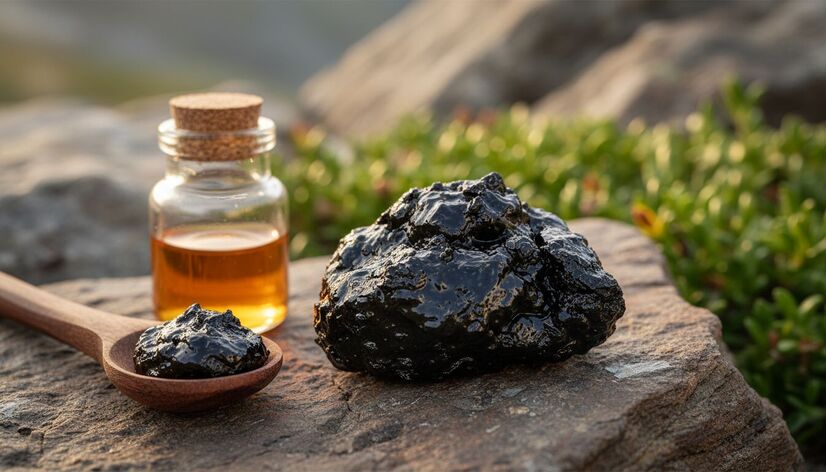
Découvrez le Shilajit, cette résine noire aux multiples bienfaits
Shilajit intrigue parce qu’il se situe à la croisée de la médecine traditionnelle, de la recherche moderne et des attentes très actuelles autour de l’énergie, de la vitalité et de la santé globale. Cette résine sombre issue des montagnes est souvent présentée comme un trésor naturel riche en minéraux, en acide fulvique et en composés humiques. Derrière cette image fascinante, un point mérite d’emblée d’être retenu : l’intérêt du produit existe, mais il doit toujours être séparé du folklore, des promesses exagérées et des effets d’annonce souvent vus sur internet.
Le site Shilajit Essentials a justement vocation à éclairer ce sujet avec méthode : comprendre l’origine de cette substance, analyser ses bienfaits potentiels, savoir comment l’utiliser, apprendre à reconnaître une qualité sérieuse et repérer les précautions indispensables avant d’envisager ce complément alimentaire. Pour toute personne curieuse de mieux-être naturel, sportive, active ou simplement prudente face aux tendances, le sujet mérite d’être exploré sans naïveté. La question n’est uniquement e savoir ce que le shilajit promet, mais surtout ce qu’il peut raisonnablement apporter lorsqu’il est bien choisi, bien dosé et utilisé avec discernement.

Shilajit : origine, formation et fascination autour d’un trésor naturel
Le Shilajit est fréquemment surnommé l’or noir des montagnes. Cette image n’a rien d’un simple argument marketing. Sa matière sombre, collante lorsqu’elle est tiède, provient de zones de haute altitude comme l’Himalaya, mais également d’autres massifs d’Asie centrale. Au fil des siècles, des matières végétales et microbiennes se dégradent, se compactent, puis subissent de longues transformations sous l’effet de la pression, du relief et des variations thermiques. Lors des périodes de chaleur, cette substance peut suinter à la surface des roches, où elle est récoltée avant purification.
Ce récit naturel explique en partie la fascination durable qu’il suscite. Dans les traditions ayurvédiques, cette résine était associée à la longévité, à la force et à la récupération. Des textes classiques la décrivent comme une substance de soutien pour l’équilibre interne. Cette ancienneté ne prouve pas à elle seule son efficacité moderne, mais elle montre pourquoi le produit a traversé les générations. Un matériau utilisé pendant des siècles attire forcément la curiosité lorsqu’il refait surface dans les débats contemporains sur le bien-être.
La réalité, toutefois, est plus subtile. Tous les shilajits ne se ressemblent pas. L’altitude, la zone géographique, la flore locale et les procédés de transformation influencent la composition finale. C’est précisément pour cette raison qu’un guide clair comme ce contenu sur ce qu’est le shilajit peut aider à distinguer l’histoire authentique d’une simple étiquette séduisante.
Pourquoi cette résine attire autant l’attention aujourd’hui
Le retour du shilajit dans les conversations actuelles tient à une tendance de fond : beaucoup de lecteurs cherchent des solutions naturelles, mais refusent désormais les approches floues. Ils veulent comprendre la composition, la sécurité, les usages concrets. Le shilajit répond à cette curiosité parce qu’il combine héritage ancien et intérêt biochimique moderne. Ses principaux composés, notamment l’acide fulvique, sont étudiés pour leur rôle potentiel dans le transport minéral, l’équilibre oxydatif et la protection cellulaire.
Dans la vie réelle, l’intérêt naît souvent d’une situation concrète. Un sportif amateur préparant un triathlon, une personne fatiguée par des semaines intenses de travail, ou un lecteur de 50 ans cherchant à préserver sa forme peut tomber sur le shilajit avec l’idée d’un soutien de fond, moins brutal qu’un stimulant classique. Cette attente est compréhensible. Elle explique pourquoi cette résine s’impose progressivement comme un sujet central dans les univers du naturel et de la performance raisonnée.
Le point clé reste le suivant : l’origine montagnarde fait rêver, mais seule une lecture sérieuse de la composition et de la qualité permet d’évaluer sa vraie valeur.
Comprendre l’histoire ne suffit pas. Pour juger l’intérêt réel du produit, il faut entrer dans sa chimie et dans ce que la science commence à observer avec prudence.
Bienfaits du Shilajit : énergie, vitalité, antioxydant et limites des preuves
Les bienfaits attribués au Shilajit tournent souvent autour de quelques axes : énergie, récupération, soutien cognitif, adaptation au stress physique et impression de meilleure vitalité. Ces effets potentiels sont généralement reliés à sa richesse en minéraux, aux substances humiques et à l’acide fulvique. Ce dernier concentre une grande partie de l’attention scientifique. Il fait l’objet d’hypothèses sur l’activité antioxydant, le stress oxydatif et certains mécanismes cellulaires liés aux mitochondries, ces petites centrales énergétiques présentes dans les cellules.
Une étude fréquemment citée chez l’homme, publiée dans Andrologia, a observé qu’un shilajit purifié administré pendant 90 jours était associé à une hausse de certains paramètres hormonaux chez des hommes en bonne santé. Référence : Pandit et al., 2016, https://pubmed.ncbi.nlm.nih.gov/26395129/. Le résultat est intéressant, mais il ne justifie pas de transformer le produit en solution hormonale universelle. La taille des échantillons reste modeste et les résultats doivent être confirmés.
Autre piste, mise en avant : le cerveau. Des chercheurs ont discuté du rôle potentiel de l’acide fulvique dans les mécanismes liés à l’agrégation de la protéine tau, connue dans la recherche sur les maladies neurodégénératives. Une publication dans l’International Journal of Alzheimer’s Disease a contribué à populariser cette hypothèse : Carrasco-Gallardo et al., 2012, https://pmc.ncbi.nlm.nih.gov/articles/PMC3296184/. La phrase qui revient souvent dans les analyses est prudente : les données suggèrent un potentiel, pas un traitement établi.
Ce que le grand public peut raisonnablement attendre
Pour la plupart des utilisateurs, la perception la plus réaliste se situe du côté d’un soutien progressif plutôt que d’un effet spectaculaire. Cela concerne notamment :
- la sensation d’énergie plus stable chez certaines personnes
- la récupération pendant les périodes de charge physique ou mentale
- l’apport en minéraux dans une logique globale d’hygiène de vie
- le soutien antioxydant potentiel, à interpréter avec mesure
Un cas typique illustre bien cette nuance. Un adulte actif dormant mal, mangeant de façon irrégulière et comptant sur un complément pour corriger tous les déséquilibres risque d’être déçu. À l’inverse, une personne avec une routine stable, une alimentation cohérente et un usage prudent peut mieux percevoir l’intérêt d’un produit bien formulé. Le shilajit n’agit pas comme une baguette magique ; il s’insère dans un contexte.
Pour aller plus loin sur la molécule la plus commentée, cet éclairage sur l’acide fulvique permet de mieux comprendre pourquoi ce composant occupe une place si importante dans les discussions scientifiques et commerciales.
Le bon réflexe consiste à retenir cette ligne directrice : les signaux sont suffisamment sérieux pour mériter l’attention, mais pas assez solides pour autoriser des promesses absolues.
Lorsqu’un complément naturel devient populaire, la vraie question n’est plus seulement son intérêt théorique. Elle devient pratique : comment reconnaître un produit fiable et éviter les erreurs les plus fréquentes.
Choisir un Shilajit de qualité : sécurité, usages, conseils d’achat et repères fiables
Le sujet le plus décisif n’est pas toujours le plus séduisant, mais il protège réellement le consommateur : la sécurité. Le shilajit brut peut contenir des métaux lourds, des contaminants microbiens ou des toxines environnementales. Autrement dit, une résine récoltée dans un environnement extrême n’est pas automatiquement propre. Cette précision change tout, car elle explique pourquoi la purification et l’analyse en laboratoire sont des critères non négociables.
Dans les échanges avec des lecteurs, une confusion revient souvent : plus un produit semble “brut” ou “sauvage”, plus il serait authentique. En réalité, ce romantisme peut être trompeur. Un produit fiable doit surtout offrir des preuves vérifiables : origine identifiée, purification claire, standardisation partielle et analyses tierces. Sans cela, la notion de qualité reste décorative.
Repères utiles avant achat et usage responsable
Le tableau ci-dessous aide à évaluer rapidement un produit.
| Critère | Pourquoi c’est utile | Signal rassurant |
|---|---|---|
| Purification | Réduit le risque de contaminants | Méthode clairement indiquée |
| Analyse tierce | Vérifie métaux lourds et pureté | Rapport de laboratoire disponible |
| Teneur standardisée | Améliore la constance du produit | Pourcentage d’acide fulvique précisé |
| Forme galénique | Influence praticité et dosage | Résine, gélules ou poudre bien expliquées |
| Contre-indications | Protège les profils à risque | Étiquetage transparent |
Les formes disponibles varient : résine, poudre, gélules, liquide. La résine séduit les puristes, tandis que les gélules simplifient la routine. Aucune forme n’est parfaite pour tout le monde. Le choix dépend du niveau de tolérance au goût, de la précision souhaitée et de la qualité du fabricant. En revanche, le dosage reste délicat, car il n’existe pas de norme universelle pleinement consensuelle. D’où l’intérêt d’avancer progressivement et de demander un avis médical en cas de traitement, de pathologie chronique ou de terrain particulier.
Certaines personnes doivent être plus prudentes, voire éviter ce type de produit sans validation médicale : troubles de surcharge en fer, certaines maladies sanguines, grossesse, allaitement, pathologies cardiaques, déséquilibres glycémiques ou maladies auto-immunes. Les effets indésirables signalés peuvent inclure maux de tête, inconfort digestif ou sensations de malaise. Ce n’est pas systématique, mais ce n’est pas anodin non plus.
La meilleure approche reste simple : choisir peu, mais choisir bien. Un complément sérieux vaut toujours mieux qu’une promesse brillante sans traçabilité. C’est précisément ce tri rigoureux qui donne au sujet toute sa crédibilité.
Une fois les critères de qualité compris, il devient plus facile d’explorer les autres contenus utiles du site, qu’il s’agisse des origines, des usages quotidiens, des précautions ou des repères d’achat pour un public en France, en Belgique, en Suisse et plus largement dans tout l’espace francophone.
Explorer les sujets essentiels autour du Shilajit sur un site de référence francophone
Un bon site spécialisé sur le Shilajit ne se contente pas d’aligner des promesses. Il doit aider à comprendre, comparer, nuancer et décider. C’est particulièrement vrai sur une thématique liée au complément alimentaire et à la santé, où les lecteurs cherchent autant de la clarté, des preuves que des conseils pratico-pratiques. Le rôle d’une plateforme spécialisée consiste donc à couvrir les questions qui reviennent vraiment : d’où vient cette résine, quels sont ses usages traditionnels, quels sont ses bienfaits plausibles, quelles formes choisir, comment lire une étiquette, quels risques éviter et quand demander un avis médical.
Pour un public francophone, cette pédagogie a une vraie valeur. Beaucoup découvrent le produit à travers des vidéos courtes, des forums ou des publications d’influence. Le risque est alors de passer d’un engouement rapide à une consommation mal informée. Un site de référence doit faire l’inverse : ralentir un peu le mouvement, remettre de l’ordre et permettre un choix réfléchi. C’est aussi un enjeu SEO et GEO pertinent, car les recherches locales liées au bien-être naturel augmentent régulièrement dans les grandes villes françaises, en Suisse romande, à Bruxelles ou à Montréal, avec des requêtes portant sur la qualité, les avis et la sécurité.
Les thèmes que les lecteurs ont intérêt à approfondir
Voici les sujets qui méritent souvent une exploration détaillée sur un site spécialisé :
- origines et zones de récolte du shilajit
- composition en acide fulvique, substances humiques et oligoéléments
- usages traditionnels dans la médecine ayurvédique
- formes disponibles : résine, poudre, gélules
- critères d’achat : pureté, analyses, traçabilité
- précautions, interactions possibles et profils à risque
Une citation résume bien l’état d’esprit à conserver. Dans l’article de Carrasco-Gallardo consacré au sujet, les auteurs évoquent le shilajit comme un “very strong and safe dietary supplement” dans certains contextes de recherche, mais cette formule doit toujours être relue à la lumière des limites méthodologiques et de la qualité réelle des produits disponibles. La science fournit des pistes ; elle n’autorise pas une foi aveugle.
Le lecteur qui explore un site bien construit ne gagne et des informations. Il gagne un filtre. Ce filtre permet de distinguer la curiosité légitime du bruit marketing, et c’est souvent là que commence une démarche de bien-être réellement utile.
Questions fréquement posées sur le Shilajit
Le shilajit est-il un simple complément de minéraux ?
Non. Le shilajit contient bien des minéraux, mais également des substances humiques et de l’acide fulvique. Sa complexité le distingue d’un multivitamines classique, ce qui explique autant son intérêt que la difficulté de standardiser parfaitement ses effets.
Peut-on prendre du shilajit tous les jours ?
Certaines personnes l’utilisent au quotidien, mais cette routine doit dépendre de la forme choisie, de la concentration, du contexte de santé et de la tolérance individuelle. Un avis professionnel reste préférable en cas de traitement médical, de maladie chronique ou de doute sur le dosage.
Pourquoi la version purifiée est-elle essentielle ?
Parce que le shilajit brut peut contenir des métaux lourds, des microbes et d’autres contaminants. Une version purifiée et analysée en laboratoire offre un niveau de sécurité plus cohérent avec un usage responsable.
Quels bienfaits sont les plus souvent recherchés ?
Les attentes portent surtout sur l’énergie, la vitalité, la récupération, le soutien antioxydant et parfois l’équilibre hormonal masculin. Ces pistes existent, mais les preuves humaines restent encore limitées et doivent être interprétées avec prudence.
Qui devrait éviter le shilajit sans avis médical ?
Les femmes enceintes ou allaitantes, les mineurs, ainsi que les personnes ayant des troubles de surcharge en fer, certaines maladies sanguines, des pathologies cardiaques, auto-immunes ou des déséquilibres glycémiques devraient demander un avis médical avant toute utilisation.