

In Brief
After age 55, consider checking with a healthcare professional before taking a Shilajit supplement if you have a chronic condition, take regular medication, have kidney problems, or have iron overload.
There are still few human trials. Some interesting findings relate to specific extracts and do not apply to all products.
Quality cannot be judged by color or texture: ask for an independent, dated analysis linked to the batch number.
Never change a treatment to take this supplement. Persistent fatigue, pain, or memory problems should first be medically assessed.
After age 55, you might consider a supplement for many different reasons: curiosity, low energy, a recommendation from someone close to you, or an interest in Himalayan traditions. Age alone is not enough to determine whether Shilajit is right for you. Your medications, kidney and liver test results, iron levels, and the actual quality of the product matter more than an energy claim on a label.
Shilajit is a complex organo-mineral substance whose composition varies according to its origin and purification. The available evidence does not support treating it as a necessary part of aging or as a substitute for treatment. Some human studies offer leads, but they involve small groups and specific extracts. The sensible approach is to ask a doctor or pharmacist the right questions before starting, especially if you take several medications or a symptom persists.
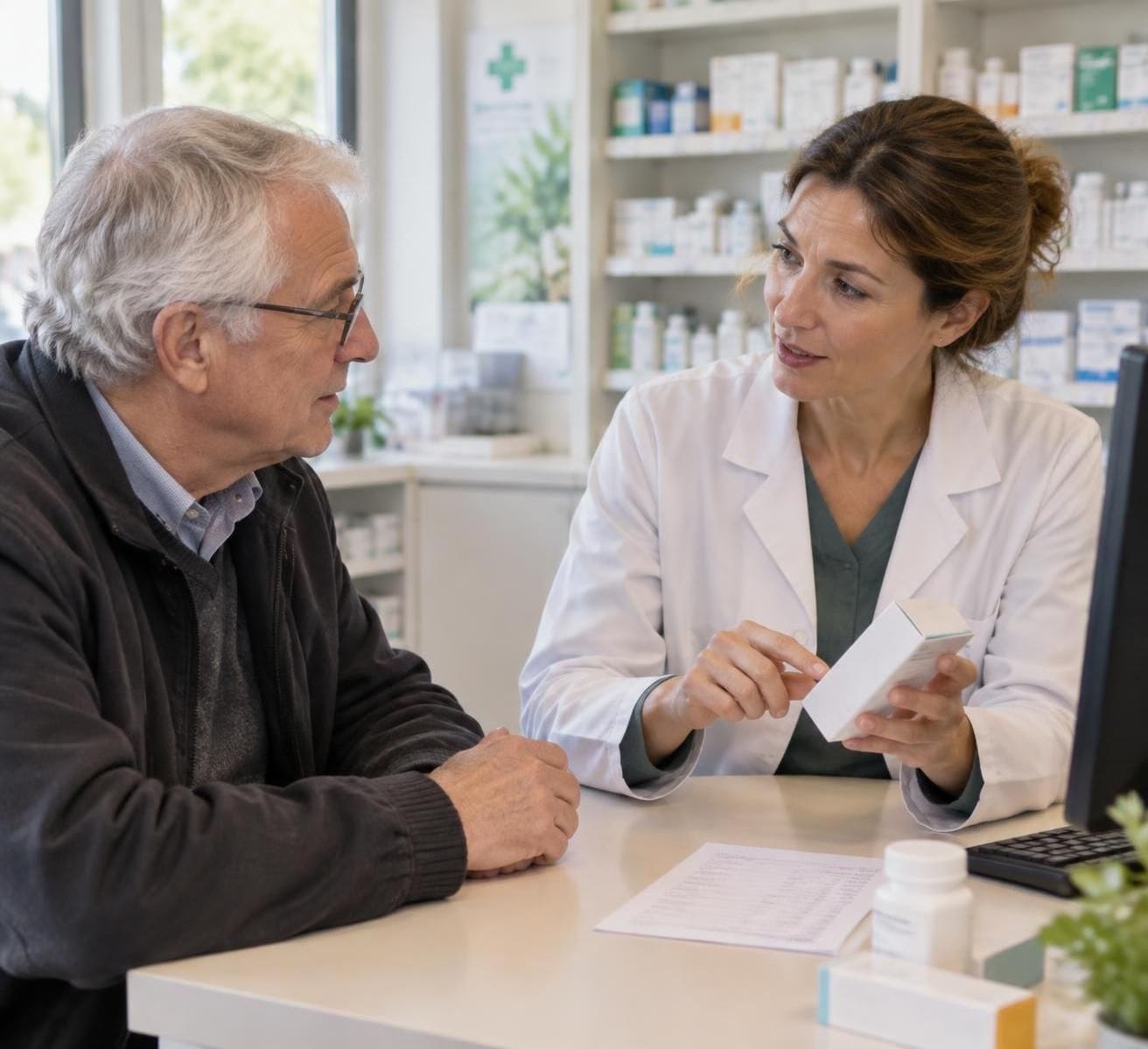
Shilajit after age 55: why ask for advice before taking it?
With age, people’s medical situations often become more individual: some take several medications, while others take none. Kidney function may decline, but not in the same way for everyone. A supplement that seems harmless can also complicate the monitoring of a condition or make it harder to identify the cause of an adverse effect.
It is particularly useful to speak with a healthcare professional if you have a chronic condition, a history of kidney stones, gout, a liver disorder, or long-term treatment. Bring the exact product name, its ingredients, and, if possible, its certificate of analysis. Being cautious does not mean Shilajit is necessarily dangerous: it helps establish whether it is suitable for your situation.
An organo-mineral substance whose composition can vary
Shilajit is neither a single plant nor a pure mineral. It forms in mountainous regions, particularly the Himalayas, and contains organic substances and minerals in varying proportions. Fulvic acid is one of the most studied components, but it does not represent the whole product; dibenzo-alpha-pyrones (DBPs) are also being studied.
Preclinical research on DBPs suggests a possible role in mitochondrial function and the coenzyme Q10 cycle. This mechanism remains a research hypothesis: it does not demonstrate increased energy in humans. To learn more about this group of compounds, you can read an overview of fulvic acid and its characteristics, bearing in mind that a commercial explanation is no substitute for a clinical study.
What benefits can you reasonably expect from Shilajit after age 55?
Traditional uses and laboratory findings do not constitute proof of medical effectiveness. It is more accurate to distinguish between what is based on tradition, what has been observed in cells or animals, and what has actually been tested in people. Human evidence is still limited and does not guarantee improvement for every user.
Traditional uses, preliminary studies, and benefits that remain uncertain
Shilajit is used as a tonic in some traditions. This history of use may explain current interest, but it does not confirm detoxification, rejuvenation, or disease prevention. Findings relating to vitality or testosterone should not be generalized to everyone over age 55.
A randomized, double-blind, placebo-controlled trial followed 60 postmenopausal women aged 45 to 65 with osteopenia for 48 weeks. Participants received 250 or 500 mg per day of a standardized, patented extract; the authors reported less loss of bone mineral density in the lumbar spine and femoral neck than with placebo, as well as changes in bone, inflammatory, and oxidative stress markers. The study was small, included women only, and concerned a specific extract; it does not replace osteoporosis treatment. It is listed as PubMed 35933897. The authors’ connection to the extract’s manufacturer should also be taken into account when interpreting the results.
Another eight-week trial in healthy, physically active young men studied a purified, patented extract at 250 or 500 mg per day. At 500 mg, the decrease in peak strength after a fatigue protocol was smaller than with placebo, 8.9% versus 16.0%, and serum hydroxyproline, a marker associated with collagen breakdown, decreased. These findings on connective tissue cannot be extrapolated to older adults and do not prove a “testosterone-boosting” effect (study published in PMC).
Finally, an in vitro experiment found that fulvic acid inhibited the aggregation of Tau protein and promoted fibril disassembly. This is basic research, not proof of an effect in humans or of prevention of cognitive decline (study on Tau protein). If you have memory problems, ask for an assessment rather than taking supplements.
Level of evidence | What we can say | Limitations to bear in mind |
|---|---|---|
Traditional uses | Used as a tonic in some practices | Does not prove a medical benefit |
Preclinical studies | Research leads on mitochondria, collagen, or Tau | Cells and mechanisms do not always predict effects in humans |
Human trials | Preliminary findings on bone density and strength | Small sample sizes, limited duration, and specific extracts |
Topics related to male vitality are sometimes presented much more confidently than these findings warrant. If you are wondering about the role of Shilajit in men’s health or andropause and its symptoms, prioritize a medical discussion over interpreting your testosterone level on your own.
Is Shilajit suitable for your health and medical history?
A chronic condition does not automatically mean you should avoid this supplement, but it makes an individual assessment more important. Recent test results, symptoms, other products you take, and the exact composition of the Shilajit all need to be considered. Safety data remain insufficient for several medical situations.
Kidney disease, liver disorders, and iron metabolism: what to check
Kidney filtration often declines with age, although there are large differences from person to person. Repeated exposure to contaminants is therefore a greater concern if your kidney function is reduced. Because the liver is involved in many metabolic processes, a known liver disorder also warrants advice before taking anything.
Shilajit may contain iron, but the amount depends on the product. Do not assume that all extracts contain the same amount or that additional iron is desirable. If you have kidney disease, a liver disorder, or a history of gout, ask your healthcare professional whether your test results and circumstances allow you to consider this supplement.
Hemochromatosis or iron overload: what precautions should you take?
If you have diagnosed hemochromatosis or iron overload, do not start taking Shilajit without medical advice. Iron can accumulate in the body, and your doctor should interpret your ferritin and other laboratory results. The key point is to check the actual iron content of the product and whether it is compatible with your monitoring plan.
Kidney stones or kidney disease: when should you ask for advice?
A history of kidney stones is not enough to predict how you will react to Shilajit. However, it is a reason to mention the type of stone, any recurrences, and your kidney test results. Do not use a supplement to mask lower back pain, blood in your urine, or urinary discomfort: these symptoms should be assessed.
Shilajit and medications after age 55: which interactions should you check?
Many of the medication interactions attributed to Shilajit are based on possible mechanisms or limited data, not on well-established clinical cases. That is no reason to ignore them: when a treatment is essential, the safest course is to have your doctor or pharmacist check.
Diabetes and high blood pressure medications, anticoagulants, and other long-term treatments
A possible effect on blood sugar could add to the effect of insulin or a diabetes medication, creating a theoretical risk of hypoglycemia. An effect on vasodilation could also add to the effects of some blood pressure medications, potentially causing dizziness or low blood pressure, particularly when standing up.
For warfarin, apixaban, aspirin, or other medicines that affect blood clotting, a possible effect on platelet aggregation is sometimes suggested, although there is not enough clinical evidence to quantify the risk. Also ask for advice if you take levothyroxine: minerals can interfere with the absorption of some medicines, and your pharmacist can tell you whether you need to space out doses. This list is not exhaustive.
“Doses studied in a trial do not automatically become a recommendation for someone taking medication or living with a chronic condition.”
How can you check the quality and purity of Shilajit?
Marketing terms such as “100% raw” or “wild” can create a reassuring impression of naturalness. However, unpurified Shilajit may pose a contamination risk; quality depends in part on the processing used and documented testing. Color, smell, taste, and texture cannot verify purity.
Origin, purification, and independent batch testing: what evidence to ask for
The raw product may contain heavy metals, particularly lead, arsenic, cadmium, or mercury. European Regulation 2023/915 sets maximum levels for certain contaminants in food and supplement categories; the applicable limits depend on the product category and how it is marketed. Ask for numerical results rather than a simple “lab tested” claim.
Check the declared origin, the purification steps, and whether there is a certificate of analysis (COA) issued by an independent third-party laboratory. It should be legible, dated, linked to the batch number you bought, and cover at least heavy metals and microbiological contaminants. Water extraction, filtration, and controlled drying may be part of the process, but no marketing claim alone guarantees safety.
Some studies describe the mineral complexity of Shilajit; that does not mean every product contains the same substances or proportions. The best protection is an analysis specific to the batch that can be interpreted and verified. A brand or customer review is no substitute for this evidence: product reviews may tell you about the user experience, but they cannot certify the product’s composition.
Practical guide to reading a certificate of analysis
Does the batch number exactly match the one on your package?
Are the laboratory and the date of analysis clearly identified?
Do the results give measured values for lead, arsenic, cadmium, mercury, and microbiological contaminants?
Are the units and limits of quantification stated, rather than a vague phrase such as “compliant”?
Shilajit resin or capsules: which form should you choose after age 55?
Resin is measured out in a small amount and can be dissolved in a drink; capsules are easier to carry, and their labels generally state the weight per unit. Neither form is consistently more effective or safer. In either case, check the amount of extract, added ingredients, and batch testing.
The texture of a resin does not reveal how well it has been purified. A capsule is not automatically more consistent if the manufacturer does not document its contents. First compare the analyses and traceability, then choose the format you can use according to the label. A guide to what Shilajit is can help explain the different forms, but it does not replace checking the product you buy.
What dose of Shilajit should you take, and for how long?
There is no universally validated dose or duration for everyone over age 55. The bone studies used 250 or 500 mg per day of a specific patented extract; the strength study also tested these amounts using a different protocol. These are research findings, not a prescription to follow with a resin or capsule that has a different composition.
Follow the label without increasing the dose or extending use without reassessment
If a healthcare professional considers it reasonable for you to take it, follow the product label and agree on a time to reassess whether it is useful. Do not increase the dose because you do not notice an effect, and do not continue taking it without reviewing the situation. A supplement does not replace a balanced diet, prescribed treatment, or assessment of fatigue.
To prepare for this discussion, a resource on dosages stated by manufacturers can be a starting point, but a healthcare professional should check whether they are appropriate for your situation. Combinations with other products, such as Shilajit and maca, are not automatically better studied or more suitable.
Practical guidance after age 55
Shilajit: compare the forms before choosing
Resin and capsules differ mainly in how they are taken and the information available on the label. Use this table to prepare your checks and questions.
On a small screen, scroll horizontally to view the table.
| Form | Ease of use | Information to check on the label | Points to watch | Quality evidence to request |
|---|---|---|---|---|
| Resin Prepare before taking | You need to measure out an amount and dissolve or mix it as directed by the manufacturer. Its texture can make dosing less convenient. |
|
Color, smell, or texture alone cannot confirm identity, purity, or quality. Check that the container closes properly and that the instructions are clear. | Ask for a certificate of analysis for the batch being sold, with the date, sample identity, and contaminant test results, especially for heavy metals. |
| Capsules Ready to take | Generally convenient to carry and take. The number of capsules per serving should be clearly stated. |
|
Check what each capsule actually contains, rather than relying solely on the promotional claims on the package. Also check for potential allergens and storage instructions. | Ask for a certificate of analysis for the batch, showing identity and contaminant checks. Verify that the document comes from an identified laboratory and is dated. |
A generic certificate or one without a batch number is less useful for checking the specific product you have.
Questions to ask a healthcare professional
Check the questions you would like to discuss with your doctor or pharmacist.
No questions selected.
This comparison provides general guidance and does not replace medical advice. After age 55, ask for advice before starting a supplement, particularly if you are taking medication or have a chronic condition.
What Shilajit side effects should you watch for?
Long-term tolerability data remain limited. Digestive problems or an allergic reaction are possible, and a contaminated product may expose you to problems that are not caused by Shilajit itself. Note when you started, how much you take, and any unusual changes, especially if you started several supplements at the same time.
Digestive problems, allergies, and signs requiring urgent care
If you experience unusual or persistent symptoms, stop taking it and ask a doctor or pharmacist for advice. Difficulty breathing, swelling of the face or tongue, or feeling seriously unwell requires urgent care: call 15 or 112. Do not take the product again after a concerning reaction without getting advice.
“A new reaction should be taken seriously, even if the supplement is sold as natural and the amount you took seems small.”
What should you ask your doctor or pharmacist about Shilajit?
To get a useful answer, bring the package or a clear photo of the label, the certificate of analysis if available, and a complete list of your medications and supplements. Also explain what you hope to improve: energy, recovery, or another symptom. This helps the healthcare professional distinguish a general wellness goal from a health problem that needs assessment.
Prepare for a useful discussion about your medications, medical history, and expectations
You can print out these questions and add your latest laboratory results. They cover the main points to check, without replacing the judgment of the person who knows your medical history.
“Given my current medications (blood pressure, diabetes, anticoagulants, thyroid), is there a risk of an interaction with Shilajit?”
“Do my latest kidney (creatinine, eGFR) and liver test results mean I could consider this supplement?”
“Are my iron or ferritin levels compatible with a product that may contain iron?”
“Should my history of gout, high uric acid, or kidney stones make me cautious?”
“If you think taking it is reasonable, what dose and duration do you recommend, and when should we review it?”
“What signs should prompt me to stop taking it and contact you?”
When should you avoid self-medicating with Shilajit and seek advice for a persistent symptom?
Do not try to treat persistent fatigue, unusual weakness, unexplained weight loss, bone pain, or memory problems on your own with a supplement. These signs can have various causes, some of which are straightforward to address, but they should be assessed first. Likewise, if you are being treated for a chronic condition or take several medications, it is better to get approval from a healthcare professional than to try it on your own.
Content about products combining Shilajit and pine pollen or about a particular brand may inform your thinking, but it does not prove that a formula is right for you. The most useful decision is one that takes your medications, test results, and a product with verifiable analyses into account. This general information does not replace personalized medical advice.
Is Shilajit suitable for everyone over age 55?
No. Age alone is not enough to decide. Chronic conditions, medications, kidney and liver function, a history of kidney stones, and iron metabolism should be considered with a doctor or pharmacist.
Is resin more effective than capsules?
Neither form has been shown to be consistently superior or safer. Check the composition, purification, and especially an independent certificate of analysis for the batch you are buying.
Do the study results justify taking 500 mg per day?
No. This amount was tested using specific extracts and in specific populations. It is not a general recommendation for people over age 55.
What should I do if fatigue persists despite taking a supplement?
Stop relying on self-medication as your only response and seek a medical assessment. Persistent fatigue can have several causes and should not immediately be attributed to age or a lack of supplements.

As a wellness consultant with over 10 years of experience, I help individuals and businesses incorporate natural health practices to improve their quality of life on a daily basis.