
In Brief
Shilajit of quality = clear origin, ideally Himalaya or Altai, and harvested at altitude.
Purity takes precedence over marketing: demand laboratory analyses against heavy metals, pesticides, bacteria, and other contaminants.
The level of fulvic acid remains a practical benchmark: aim for at least 60%, with a commonly sought range between 50 and 80% depending on the composition.
Resin remains the most raw form, while capsules and liquids better suit certain daily uses.
Credible certifications, precise traceability, a transparent manufacturer, and a coherent price greatly reduce the risk of counterfeiting.
Shilajit attracts an increasingly broad audience, from amateur athletes to tired individuals seeking more structured natural support. This success is no coincidence. This organo-mineral matter, resulting from the slow transformation of plants and minerals in mountain ranges such as the Himalayas or the Altai, concentrates compounds studied for their potential role in cellular energy, recovery, and overall balance. However, this renewed interest has a very concrete downside: the more visible Shilajit becomes, the more the offering becomes blurred.
On the ground, the gap between a good product and an imitation can be vast. An authentic resin, properly purified, is nothing like a diluted powder, overheated or loaded with additives. Scientific data support some cautious uses. For example, a review published in the Journal of Ethnopharmacology described Shilajit as “a potent and very safe dietary supplement” within a controlled quality framework, while emphasizing that its value depends on its purity and preparation. Source: https://pubmed.ncbi.nlm.nih.gov/23701840/. The correct reflex is therefore to evaluate the origin, analyses, composition, and reliability of the brand before purchase, especially if you are on medication or if your medical situation demands more caution.
Introduction to Shilajit: How to identify a quality natural organo-mineral resin?
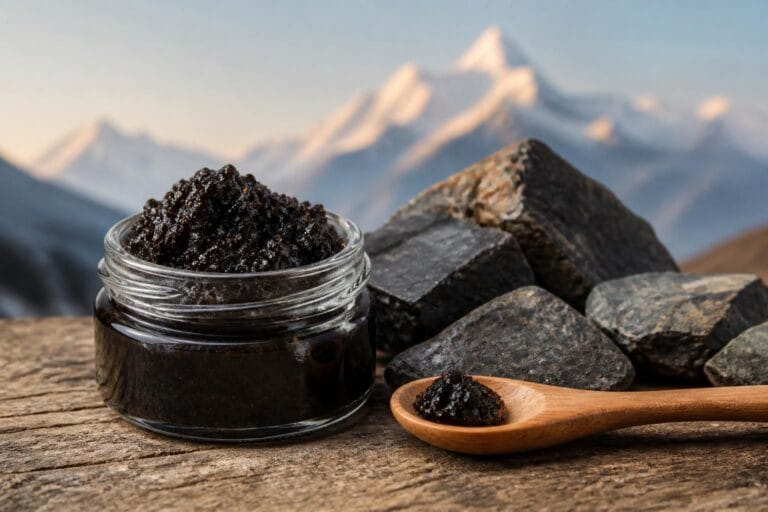
Shilajit is a natural substance that oozes from high mountain rocks after centuries, sometimes millennia, of transformation of plant material trapped in a mineral environment. Its composition combines humic acids, minerals, trace elements, and especially fulvic acid, often presented as one of the most useful markers to judge its value. To better understand its nature, many readers start by consulting educational resources like this detailed explanation about Shilajit.
The first criterion is neither the packaging nor the commercial promise, but the quality of the raw material. A true resin of Shilajit must be harvested, filtered, and then rigorously purified. When a seller remains vague about the origin, the extraction process, or laboratory checks, vigilance becomes essential. This is where a truly informed purchase begins.
Proven benefits of Shilajit for health and well-being
The benefits attributed to Shilajit should not be presented as miracle promises. However, several serious publications suggest an interest in supporting vitality, adaptive response to stress, and oxidative protection. A study published in Andrologia notably explored the use of purified Shilajit in men over several weeks, with results on certain hormonal markers, within a very specific and controlled context. Source: https://pubmed.ncbi.nlm.nih.gov/26395129/.
In practice, many users describe a more stable feeling of tone than that provided by fast stimulants. This point interests both active individuals and endurance athletes. Those who wish to deepen their uses based on profiles can compare Shilajit benefits, effects sought in men, or even usage specifics in women. The essential nuance remains: a mediocre product greatly reduces expected interest.
The impact of increasing demand on the quality of available Shilajit
In recent years, the Shilajit market has densified rapidly. Serious brands coexist with opportunistic operators who rely on highly worked visuals but little proof. This commercial pressure favors blends with maltodextrin, common mineral powders, or even poorly purified products exposing consumers to contaminants.
A frequent case well illustrates the problem. Marc, 47 years old, an amateur runner, thought he was buying premium Shilajit at a low price on a marketplace. The product smelled like caramel, dissolved poorly, and left a sandy deposit. A few weeks later, he discovered the brand provided no independent analyses. This type of experience reminds us that regarding Shilajit, an increase in demand does not automatically improve quality. On the contrary, it requires more methodical selection.
Geographical origin of Shilajit: Why the Himalayas and Altai guarantee better quality
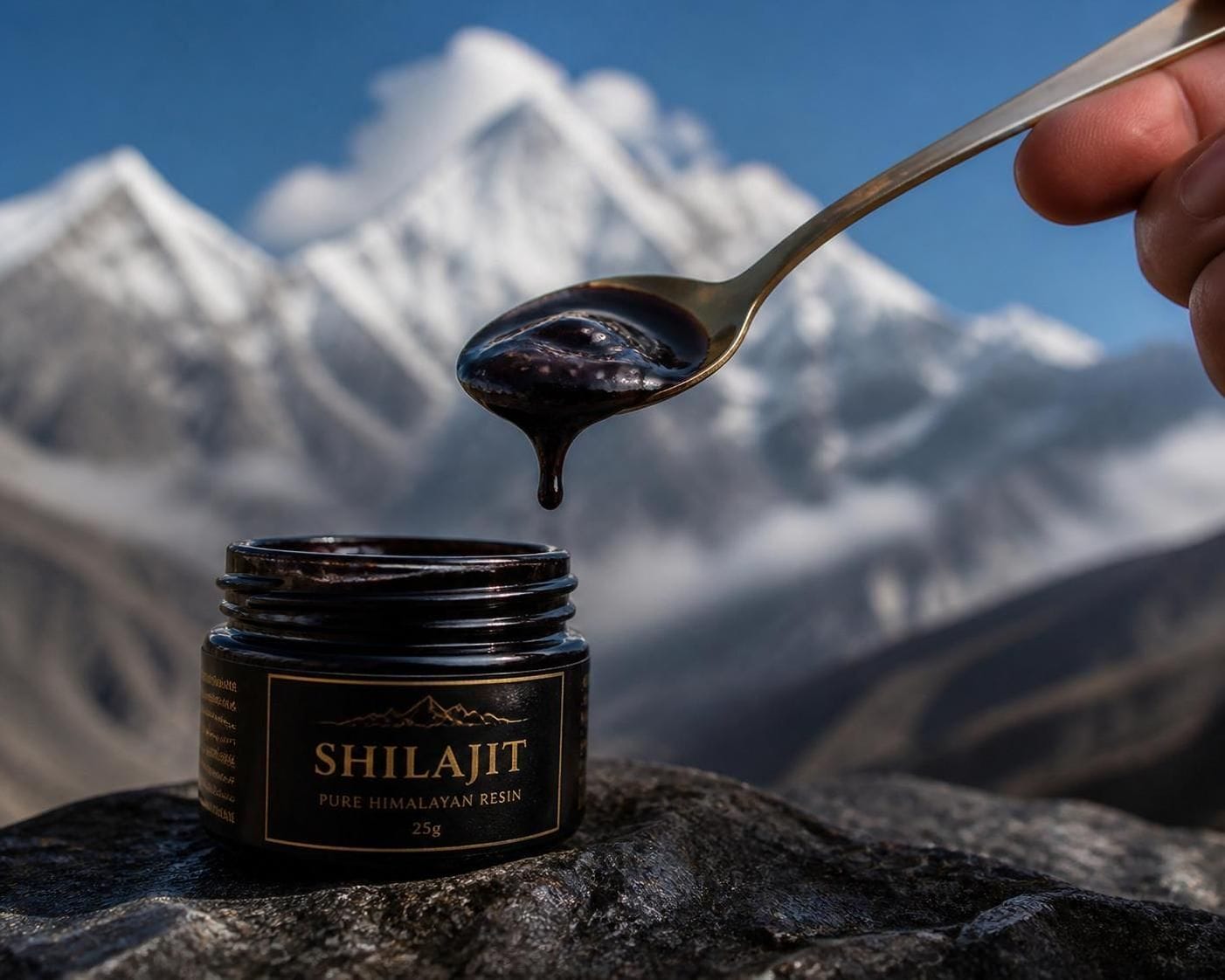
Origin directly influences the mineral richness of Shilajit. The most sought-after areas are the Himalayas and the Altai, sometimes spelled Altaï in Francophone use, because these massifs offer particularly favorable geological and climatic conditions. The cold, altitude, ecological isolation, and slow decomposition contribute to a raw material often denser and more stable.
Serious manufacturers understand this. Players like Shamballa or Nutrition Pro highlight precise harvesting areas, because origin is not a marketing detail. It is traceability data. Between a batch from a documented massif and another labeled simply “Asian mountain”, the trust gap is considerable.
Influence of altitude and region on concentration of active components
Above 4,000 meters in the Himalayas, environmental pressure and the rarity of human disturbances favor a generally better-preserved Shilajit. This does not mean every batch is perfect. On the other hand, the chances of obtaining a resin naturally rich in minerals and fulvic acid are better. In the Altai, the reputation rests on environmental purity and mineralization often appreciated by connoisseurs.
The region modifies the composition: trace element content, humic profile, aromatic density, dissolution behavior. A product from central Himalaya does not have exactly the same profile as an extract from the Altai. That is why serious comparisons focus on analyses and not only on storytelling. The core idea is simple: altitude and geological terroir shape the active matter.
Recognizing products with certified origin and avoiding fraud
A certified origin is based on documents, not just a simple map printed on the label. Look for numbered batches, analysis certificates, precise mentions of the harvest zone, and if possible, elements of the supply chain. Brands that publish this information provide greater reassurance. This is seen in certain specialists such as Shamballa or Nutrition Pro, who know that trust is built on evidence.
Conversely, a Shilajit sold without serious indication of origin, with a suspiciously uniform color and a “premium” promise without justification, deserves to be avoided. A “Himalayan” label alone is not enough. The real difference lies in documentation and overall product coherence. A precise provenance better protects your purchase than any slogan.
Purity and purification methods: key criteria for a safe and effective Shilajit
Purity remains at the heart of the matter. Raw Shilajit may contain unwanted particles from its natural environment. Without mastered purification, you can find lead, arsenic, microbiological residues, even mycotoxins. The safety of the product therefore depends on real and verifiable procedures. A nice texture never replaces a laboratory check.
The cautious consumer must also read the ingredient list. A resin or capsule of Shilajit does not need to be loaded with maltodextrin, flavors, or aggressive fillers. When the composition becomes too long, doubt is legitimate. The best formula is often the simplest.
Gentle extraction techniques that preserve active principles
A good extraction aims for a delicate balance: eliminating impurities without degrading compounds of interest. Low-temperature methods are generally preferred, as they better preserve sensitive fractions of Shilajit, including fulvic acid. Excessive overheating can alter the product’s profile, especially in certain processed forms.
The best approach is to look for manufacturers who detail their extraction and purification process. A brand that is precise about filtration, concentration, and drying inspires greater confidence. In use, this often translates into better solubility, cleaner taste, and a more consistent experience.
The importance of certifications and analyses by independent laboratories
Certifications are too often mentioned without explanation. In the case of Shilajit, they serve to objectify purity, composition, and absence of contaminants. The best references remain analyses from an independent laboratory like Eurofins or Phytocontrol, as well as production frameworks like GMP or ISO. Multiplying certifications only makes sense if the documents are accessible and readable.
A simple table helps to prioritize evidence:
| Verified Criterion | Why it’s decisive | Expected Evidence |
|---|---|---|
| Heavy Metals | Reduces health risks related to lead or arsenic | Independent laboratory analysis |
| Pesticides | Confirms better purity of raw material | Detailed and dated report |
| Microbial load | Enhances usage safety | Microbiological test report |
| Active content | Allows estimation of actual value of Shilajit | Documented fulvic acid rate |
Serious certifications act as an anti-illusion filter. If a brand announces a “100% pure” product without proof, better to move on. Conversely, specialized brands like Shamballa or Nutrition Pro know that publicly available analyses are worth more than advertising talk.
Compare Shilajit Forms
Quickly compare resin, capsules, powder, and liquid based on the most useful criteria to choose quality Shilajit.
| Form | Potential Purity | Ease of Use | Dosage Precision | Additive Risk | Ideal User Profile |
|---|
Quick Reading
Nuanced Final Recommendation
Generally, resin is often the most credible form to aim for high quality and a more raw composition, but it requires more attention to dosage and use. Capsules are the simplest for daily use, at the cost of increased dependence on formulation quality. Powder can be interesting if the brand is serious, while liquid appeals with its practicality but deserves increased vigilance regarding composition. The best choice depends less on the format alone than on brand transparency, available analyses, and your tolerance for compromise between purity, practicality, and control.
Concentration of fulvic acid: the determining factor for choosing an effective Shilajit
When simplification without distortion is required, the level of fulvic acid is the most practical indicator to compare several references of Shilajit. This acid is associated with the bioavailability of certain minerals, antioxidant mechanisms, and mitochondrial activity. To simplify, it acts as a marker of functional richness, even though it does not alone summarize all the product’s quality. Readers wishing to deepen this technical point can consult this report on fulvic acid.
A credible reference clearly mentions this rate. When it is absent, the buyer cannot properly evaluate the product. Yet, in the Shilajit universe, this lack of transparency often reveals a weak offering.
Optimal fulvic acid level for maximal antioxidant and revitalizing action
Many specialists consider that an interesting Shilajit shows a level of fulvic acid of at least 60%, with a range often deemed relevant between 50 and 80%, depending on purification mode and overall mineral matrix. Below this, the product may remain consumable, but its perceived interest often decreases. This is not absolute, as the complete composition also counts, but this benchmark remains very useful at the sorting stage.
A synthesis study led by Schepetkin and colleagues recalled the role of fulvic substances in the biological properties attributed to Shilajit. Source: https://pubmed.ncbi.nlm.nih.gov/23701840/. The often quoted phrase, “The major bioactive ingredient in shilajit is fulvic acid,” nicely summarizes the purchasing logic: if this marker is low, the functional promise diminishes. A performant product therefore begins with a coherent analytical profile.
Available forms of Shilajit: How to select the form best suited to your needs
Shilajit is currently available in resin, capsules, powder, tablets, liquid, and even gummies. This diversity caters to very different lifestyles but also creates confusion. The best form is not the same for everyone. An athlete used to meticulous routines will not necessarily choose like someone often traveling.
For many, the real dilemma contrasts maximal purity with everyday simplicity. A person motivated by a traditional approach will tend towards resin. A beginner will often prefer a simpler solution to take. The right choice depends as much on your discipline as on the product itself.
Advantages and disadvantages of raw resin, powder, and capsules
Resin is often seen as the noblest reference of Shilajit. It concentrates actives well, lends itself to dissolution in warm water, and generally limits unnecessary additives. Its downside? A bitter earthy taste, less practical handling, and a dosage that requires some attention.
Powder keeps well but is also the form most exposed to dilution or filler addition. Capsules offer an easy and precise routine. However, excipients, manufacturing temperature, and certifications must be checked. To help deciding, many consult this comparison between resin and capsules.
| Form | Main advantage | Main limitation | Ideal profile |
|---|---|---|---|
| Resin | High purity and concentration | Strong taste, less practical intake | Demanding user |
| Capsules | Daily practicality | Risk of excipients or overheating | Beginner or busy active |
| Powder | Storage and versatility | Increased risk of dilution | User attentive to analyses |
| Liquid | Simple and quick intake | Variable stability depending on formula | Person seeking ease |
Tips for choosing between capsules and liquid forms according to your user profile
If you travel often, Shilajit capsules simplify regularity. If you are sensitive to taste, they avoid the sometimes harsh organoleptic dimension of resin. On the other hand, if you like to finely adjust your routine and control the raw material, liquid or resin versions retain real interest, provided they are well traced.
A practical tip is better than a rigid rule. Start with the form you are able to take regularly for several weeks, then adjust if needed. The best strategy is not the most theoretical, but the one you can maintain without friction.
Recognizing authentic Shilajit: simple tests and distinctive signs to know
An authentic Shilajit is also recognized by the senses. Its texture, smell, solubility, and behavior to heat already provide good clues. These tests never replace analyses but help detect the most blatantly suspicious products before consumption.
On this point, specialized brands like Shamballa often communicate better than generalist resellers because they know a credible natural product must be observable, handled, and verified. Coherence between appearance and documents is always a good sign.
Physical and organoleptic characteristics ensuring authenticity
A good resin of Shilajit usually has a deep black-brown color, sometimes with golden or amber reflections. At room temperature, it may be firm, then become more malleable with heat. Its taste is earthy, mineral, bitter, but not chemical. Dissolved in warm water, it should disperse evenly without leaving large sandy residues.
The flame test, used cautiously, may also guide. An authentic material tends to melt and burn without a marked plastic odor. If the smell recalls a polymer, artificial caramel, or sweet perfume, caution is advised. These sensory clues provide a simple first reading of the product.
Beware of counterfeits: risks related to adulterated products and how to avoid them
Shilajit counterfeits pose two problems: a loss of interest on one side, a health risk on the other. Some fake products are loaded with starches, gums, colorants, or low-value extracts. Others may contain more concerning contaminants. Without analyses, the buyer navigates blindly.
Avoid announcements without certifications or laboratory reports.
Steer clear of abnormally low prices for alleged premium resin.
Check solubility, smell, and texture consistency.
Verify if the brand explicitly indicates origin, extraction, and certifications.
This step may seem tedious, but it prevents many disappointments. With Shilajit, caution is not excessive skepticism, it is simply good purchasing hygiene.
Choosing a reliable manufacturer: criteria to identify a serious and transparent brand
The manufacturer plays a central role, as they transform raw natural material into a reliable product or, conversely, into a questionable batch. A credible brand clearly presents its process, certifications, control policy, and the coherence of its supply chain. In this universe, transparency is quickly visible.
Observing the market, some brands stand out more, not because they speak louder, but because they document better. Shamballa and Nutrition Pro are often mentioned in consumer exchanges for this reason: more precise descriptions, educational effort, visibility on analyses, and more structured customer service.
The importance of certifications, traceability, and customer reviews in brand choice
Certifications, traceability, and customer reviews form a useful triptych. Certifications validate product compliance, traceability enlightens its path, and user feedback helps spot batch consistency. An isolated review has little value. However, a hundred coherent returns on texture, taste, packaging, and support responsiveness form an interesting signal.
Before buying a Shilajit, check if the brand actually exists beyond social networks. Does it have an address, contactable support, a refund policy, downloadable analyses? A serious brand inspires confidence through its overall behavior, not just slogans. It is on this ground that Nutrition Pro or Shamballa are often better equipped than anonymous sellers.
European and French regulatory guarantees for a secure purchase
A manufacturer based in France or more broadly in Europe operates within a regulatory framework that facilitates certain checks. This does not automatically guarantee excellence, but offers additional safeguards: label compliance, food standards respect, documentary requirements, and sometimes registration with competent authorities. Certifications and technical data sheets are then easier to obtain.
For the buyer, it is a practical advantage. In case of a question about a batch, delivery, or side effect, dealing with a structure established in France often simplifies procedures. Trust is not decreed; it is verified both in after-sales follow-up and in the product.
Where to buy quality Shilajit? Tips for secure and risk-free purchase
The purchase channel matters almost as much as the product itself. A good reference sold by a dubious intermediary can become a bad purchase if storage, traceability, or authenticity is not controlled. For many consumers, the brand’s official site remains the safest starting point. You can, for example, consult a specialist dedicated to Shilajit to compare the information provided.
Another useful detail: also inquire about storage advice, as poorly stored active matter loses interest. Guides like these recommendations to store Shilajit help avoid mistakes after purchase. A good product badly kept quickly becomes a bad investment.
The dangers of buying on non-specialized platforms and how to avoid them
Large platforms attract by price and speed but remain risky for Shilajit. Between copied product sheets, changing sellers, and sometimes opaque batches, it becomes difficult to verify real authenticity. The same visual may also serve several references of very different levels.
To limit risks, favor a seller able to show its analyses, certifications, and control policy. If the sheet is silent on purification, harvesting, or fulvic acid level, the doubt is too great. This vigilance is especially important for fragile consumers, as well as pregnant women, nursing mothers, children, people with kidney failure, hemochromatosis, or under treatment. In these cases, professional advice is required before any Shilajit intake.
Choose specialized resellers and recognize a price coherent with quality
A specialized reseller often brings a real advantage: narrower selection, clearer technical discourse, better ability to answer about composition, extraction, or certifications. It is also with these actors that you most often find a support logic with usage advice and realistic warnings. Some practical topics, like the question of Shilajit and weight management, benefit from being read on specialized sites capable of nuancing expectations.
As for price, it should raise warnings when too low. A true resin from the Himalayas or Altai, analyzed and properly purified, has an incompressible cost. An unexpectedly low price often means compromise on raw material, certifications, or filtration. The right price is not the cheapest. It is the one consistent with the evidence provided.
Summary: the 7 essential criteria to choose a superior quality Shilajit
When comparing several Shilajit products, it is useful to reason like a calm investigator. First origin, then purity, then analyses, and finally ease of use. The best decisions rarely come from a visual crush. They come from a body of consistent clues.
Origin, purity, concentration, certification, form, manufacturer, and price
Here are the seven benchmarks that generally separate reliable Shilajit from a superficial offer:
Precise origin, ideally Himalaya or Altai.
Purity demonstrated by laboratory analyses.
Documented fulvic acid rate, with a threshold often sought from 60%.
Credible and accessible certifications.
Form adapted to your real habits.
Transparent, traceable, responsive manufacturer.
Price coherent with announced quality.
For daily use, many manufacturers recommend around 300 to 500 mg per day of Shilajit, often in the morning on an empty stomach, diluted in warm water or plant-based milk. This indication remains general and does not replace personalized health advice. In case of doubt, it is better to adapt intake with a professional rather than follow a standardized routine.
Focus on laboratory analyses and absence of contaminants
If only one criterion should take precedence, it would be access to laboratory analyses. They allow verification of absence of contaminants, consistency of active matter, resin stability, and manufacturer seriousness. This also distinguishes true expertise from mere marketing. At this level, certifications become a concrete language, not decoration.
The final word to remember is simple: good Shilajit is chosen based on evidence. Between Shamballa, Nutrition Pro, and other specialists, the most relevant brand will be the one that documents its product best, respects your real need, and does not try to make you believe a supplement replaces comprehensive care.
FAQ about Shilajit
How to take Shilajit daily?
The most common practice is to use about 300 to 500 mg per day, often in the morning on an empty stomach, in warm water or plant milk. Resin requires a bit more precision, while capsules simplify the routine. In case of medical treatment, pregnancy, breastfeeding, or chronic illness, a healthcare professional must validate the use.
Can a very cheap Shilajit be reliable?
It is rarely the best sign. Properly harvested, purified, analyzed, and traced Shilajit has a real cost. A very low price can indicate low-level raw material, diluted powder, lack of certifications, or absence of independent controls.
Is resin always better than capsules?
Not always. Resin often remains the most raw and sought-after form by experienced users, but capsules may suit beginners or those who want simple and regular intake better. The right choice depends on your discipline, taste tolerance, and formula transparency.
Which signs should make one suspect a counterfeit?
A sweet or chemical odor, sandy texture, incomplete dissolution, lack of clear origin, no analysis certificate, and excessive marketing talk are common warning signs. A serious product must prove its composition and purity.

As a wellness consultant with over 10 years of experience, I help individuals and businesses incorporate natural health practices to improve their quality of life on a daily basis.