
In Brief
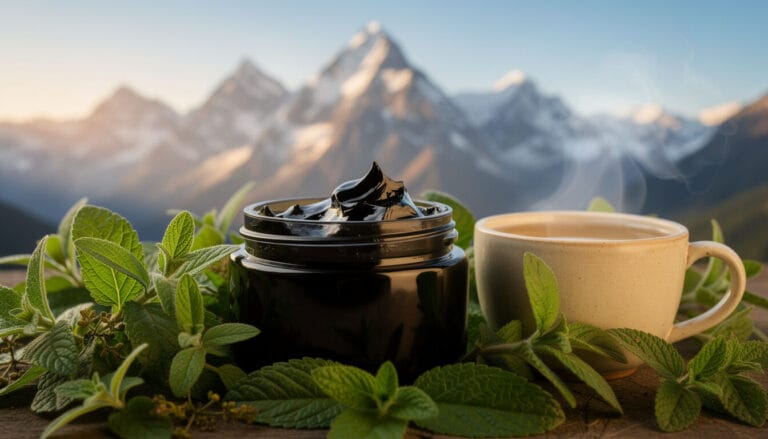
Shilajit is a natural substance resulting from the slow transformation of plant materials within high mountain rocks, mainly in the Himalayas.
Its richness in fulvic acid, minerals, and humic compounds explains part of its traditional uses and studied effects on energy, fatigue, and recovery.
Commercial forms exist as resin, powder, and capsules, but the resin is often regarded as the closest to the raw state.
The most discussed clinical data concern support for testosterone, male fertility, mental performance, and overall vitality.
A product of quality, purified and laboratory-analyzed, remains essential to avoid contaminants, heavy metals, and fake extracts.
Shilajit is generally well tolerated, but mild side effects may appear at the start, especially if the dose is too high or the intake too late.
Between the legend of the “mountain tears” and the growing interest of modern research, Shilajit occupies a unique place in the world of natural wellness. This dark, viscous or solid matter depending on temperature fascinates as much for its origin as its biochemical profile. Used for centuries in various Asian traditions, it is now sought after to support energy, resistance to fatigue, certain cognitive functions, and male hormonal balance, notably around testosterone.
The topic nevertheless deserves a rigorous look. Not all products are equal, not all effects are established with the same level of evidence, and Shilajit is neither a miracle cure nor a trivial supplement. When well chosen, well dosed, and used with caution, it can fit into a coherent health routine. When poorly purified, it conversely exposes one to avoidable risks. This reading helps you sort through traditional heritage, useful clinical data, and reliable practical advice.

Natural origins and ancestral uses of shilajit in traditional medicines
Millenary formation of shilajit in the Himalayan mountains and other ranges
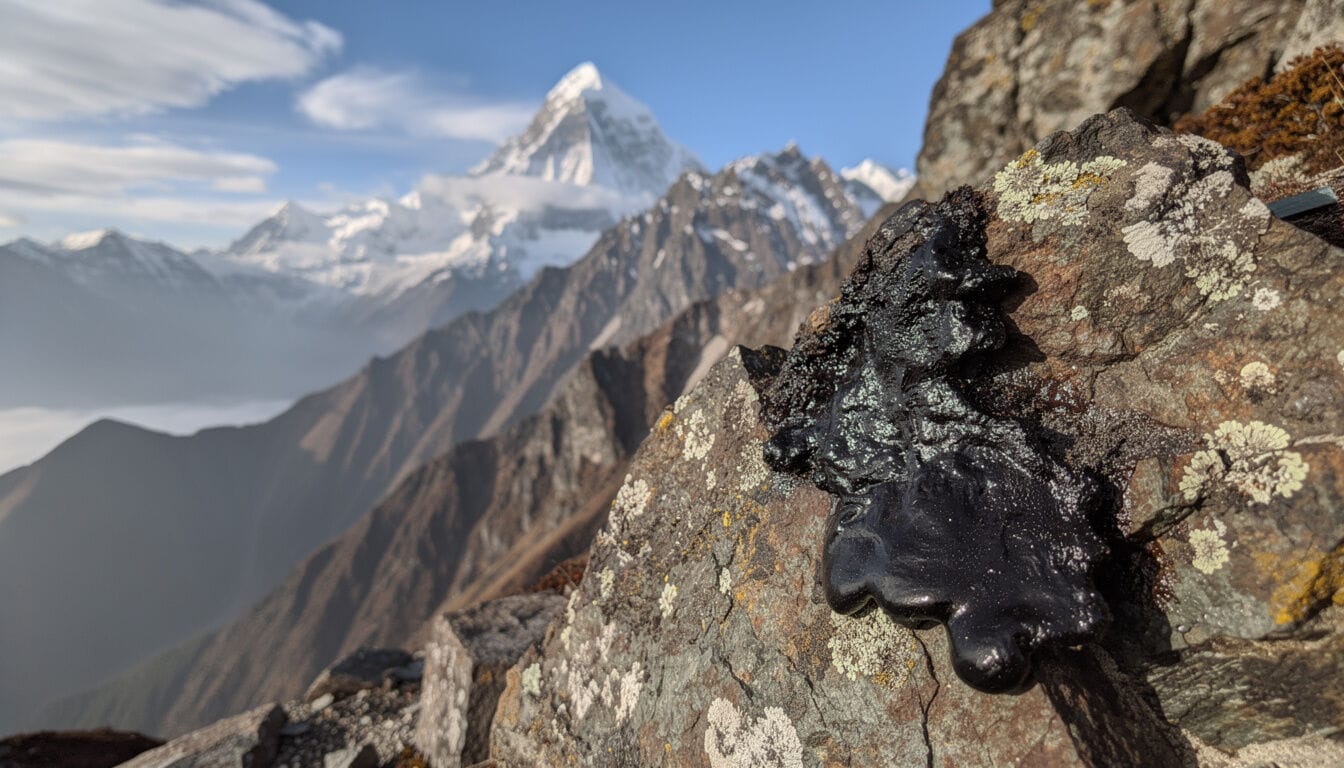
Shilajit comes from a slow natural phenomenon observed in high-altitude zones. Under the effects of pressure, thermal variations, and microbial activity, ancient plant materials break down within rock fissures. Over time, this organo-mineral mass becomes a dense, dark, sticky substance collected in certain seasons.
While the Himalayas remain its emblematic territory, it can also be found in the Altai, Tibet, the Caucasus, and even in Russia, where it is often called mumijo or mumiya. This diversity of origin explains why two batches of Shilajit may present slightly different profiles. The mountain is not just a backdrop: it shapes the composition and reputation of this rare matter.
To better understand its nature, you can consult this presentation of Shilajit, useful to locate its origin and uses.
Traditional practitioners long considered it a natural concentrate, on the border between plant and mineral. This hybrid status explains its image as a “total” substance, mobilized for overall vitality rather than an isolated organ. This holistic vision has endured through the centuries.
Local stories describe shepherds who observed animals licking rock exudates in springtime, seemingly more vigorous afterward. Even if this image partly belongs to folklore, it well illustrates the ancient interest in Shilajit. Traditions often attribute their first therapeutic intuition to attentive observation of living beings.
History of shilajit as a natural longevity remedy
In classical Indian scholarly culture, Shilajit is cited as a support for longevity and strength. Ayurvedic texts, including the Charaka Samhita and Sushruta Samhita, mention this substance as rasayana, meaning a tonic for revitalization. Its place in Ayurvedic medicine still grants it active prestige today.
In India, but also across several Central Asian regions, Shilajit was long associated with endurance, recovery, and robustness of people exposed to cold, altitude, or physical labor. In some areas, it was called “rock juice” or “tears of the Himalayas.” The word mumijo also fueled an imagination of condensed strength.
Traditional Chinese medicine has sometimes likened it to fortifying substances intended to support the vital essence. The language changes across cultures, but the core idea remains: help the body better withstand wear and tear. This historical thread prepares a good understanding of its actual composition.
Biochemical composition and natural forms of shilajit
Unique mineral and molecular profile of shilajit
Shilajit is often presented as a complex matrix rather than a single molecule. This precision matters because its potential effects probably rely on interactions between several families of compounds: fulvic acid, humic acids, dibenzo-alpha-pyrones, trace elements, and numerous minerals. This richness explains its interest but also makes its standardization more delicate.
Fulvic acid particularly attracts attention. Its small molecular size promotes interesting biological exchanges, notably around nutrient transport and antioxidant activity. To deepen this point, this dossier on fulvic acid helps understand why it is often used as a quality marker.
Iron, zinc, magnesium, copper, selenium, and sometimes calcium are also found. Shilajit is not a simple mineral supplement, but their presence contributes to its image as metabolic support. A well-characterized formula remains more credible than a vague promise on a label.
| Shilajit Components | Potential Role | Practical Interest |
|---|---|---|
| Fulvic acid | Molecular transport, antioxidant activity | Support of metabolism and bioavailability |
| Humic acids | Interaction with the digestive environment | Contributes to the overall organic profile |
| Minerals and trace elements | Enzyme cofactors | Support of vitality and general balance |
| Dibenzo-alpha-pyrones | Studied mitochondrial energy pathways | Hypothesis of cellular energy support |
On the market, Shilajit mainly exists in three forms: resin, powder, and capsules. Resin is generally seen as the most authentic form, having undergone fewer transformations. Powder can be practical but strongly depends on drying processes and the purity of the initial batch.
Capsules simplify daily intake, appealing to many active people. However, they sometimes dilute the reading of the real product, especially when the label does not specify the fulvic acid content nor contaminant analyses. For a cautious reader, transparency often outweighs marketing promises.
Comparison of commercial forms: resin, powder, and capsules
Shilajit resin retains a very characteristic texture and taste. Its bitterness, sometimes marked, puts off some users but often allows a more direct perception of the product. In practice, many who seek high quality favor this form to limit excipients and unnecessary transformations.
Powder offers the advantage of easy dosing but can be more sensitive to oxidation or denaturation depending on industrial processes. Capsules provide regularity but require real effort to read certifications and analyses. The best choice depends less on the format than on traceability and purity.
Resin: the rawest format, often preferred for fidelity to the natural product.
Powder: easier to dose, but variable depending on extraction.
Capsules: practical for daily use, provided clear analysis is required.
A good reflex is to look for Shilajit with independent analyses, mentioned origin, standardized content, and documented absence of heavy metals. The format never compensates for a bad source. This is where the topic shifts from tradition to real safety.
Adaptogenic properties and mechanisms of action of shilajit
Role of shilajit in stress management and body balance
Shilajit is frequently classified among adaptogenic supports, meaning capable of helping the body better respond to physical and psychological stressors. This notion does not mean it eliminates stress but could favor better functional stability. Many people thus describe a sensation of a steadier drive, without a sudden stimulating effect.
In Ayurveda, Shilajit is sometimes used to support dosha balance, especially when exhaustion, low tone, or difficult recovery dominate. This traditional reading does not equate to a modern biomedical model but aligns with some observations on endurance and adaptation. Language changes, physiological intuition remains close.
Experimentally, its immunomodulatory and anti-inflammatory interest is discussed in several preclinical works. Some Shilajit compounds could influence pathways related to oxidative stress and inflammatory regulation. The takeaway message remains measured: the path is serious but heavily depends on product quality and usage context.
Cellular energy stimulation and anti-aging effect
One of the strongest hypotheses concerns mitochondrial activity. Shilajit, notably through fulvic acid and certain organic derivatives, could support ATP production, the molecule at the heart of cellular energy. This is one reason it is studied in subjects suffering from functional fatigue or reduced physical performance.
The antioxidant properties of Shilajit also interest the field of aging. A frequently cited quote comes from Carrasco-Gallardo et al., in the International Journal of Alzheimer’s Disease, describing Shilajit as “a very potent and safe dietary supplement” in an exploratory framework on brain aging, with necessary methodological caution. Source: https://pubmed.ncbi.nlm.nih.gov/23690838/
Studies also focus on neuroprotective functions, with hypotheses surrounding cognition, attention, and memory. Promises must remain measured, but the link between energy metabolism, oxidative stress, and mental performance makes Shilajit a credible subject. Amid commercial noise, this biological coherence deserves highlighting.
Comparison Table of Shilajit Forms
Easily compare resin, powder, and capsules by potential purity, ease of use, taste, quality control points to verify, and recommended user profiles.
Quick advice
Capsules are often appreciated for their practicality, while resin attracts users who want a more traditional format.
| Form | Potential purity | Ease of use | Taste | Quality controls to check | Recommended user profile |
|---|
Featured form
Resin
Often seen as the most authentic form, with a marked taste and slightly more demanding handling.
Main asset
High potential purity
This block changes when you click on a table row.
Warning point
Carefully check analyses and origin
Prefer products with traceability and clearly displayed quality tests.
Scientifically validated benefits of shilajit
Fatigue relief, physical energy, and endurance
Among the most sought-after benefits, support against fatigue comes first. Animal studies and some human trials suggest that Shilajit may help maintain energy production, particularly during periods of high physical or mental load. It is not the sudden boost of a stimulant but rather a gradual support.
A trial published in the Journal of Ethnopharmacology 1 examined the impact of supplementation on muscle function and exhaustion resistance in experimental models, with encouraging results on recovery. Source: https://pubmed.ncbi.nlm.nih.gov/25096353/ The practical interest is simple: some users feel fewer “slumps” throughout the day.
The most receptive profile is often that of a very busy adult, amateur athlete, or pressured executive, with decent sleep but without feeling fully recovered. Shilajit does not erase a degraded lifestyle but can sometimes improve load tolerance. The right angle is not performance, but consistency.
Hormonal support, male fertility, and reproductive health
Shilajit is of particular interest for testosterone and male fertility. A frequently cited study, published in Andrologia in 20162, observed improvement in several sperm parameters after 90 days in infertile men receiving purified Shilajit. Source: https://pubmed.ncbi.nlm.nih.gov/20078516/
Another publication reported an increase in total testosterone after supplementation in healthy men, also with a purified extract and a defined protocol. Source: https://pubmed.ncbi.nlm.nih.gov/26395129/ These data remain limited but serious enough to justify attention to Shilajit in male hormonal health.
It must be precise: Shilajit is not a treatment for infertility nor a universal solution for low testosterone. Medical evaluation is necessary for persistent symptoms. When used coherently, it can be complementary support, especially when fatigue, stress, and poor recovery combine.
| Objective | Available Data | Level of Caution |
|---|---|---|
| Fatigue and vitality | Encouraging results, plausible mechanisms | Good interest, evidence still uneven |
| Testosterone | Some positive human trials | Promising, to be confirmed on larger scale |
| Male fertility | Improvement in some sperm parameters | Useful as a complement, not medical substitution |
| Cognition | Preclinical data and exploratory observations | Real potential, still partial validation |
Cognitive protection, nootropic effects, and mental well-being
Shilajit also sparks moderate nootropic interest. Proposed mechanisms combine antioxidant protection, better energy metabolism, and possible influence on certain neural pathways. For people describing mental fatigue linked to overwork, this angle seems particularly relevant.
Researchers have explored its potential effects in age-related cognitive decline, without allowing a specific medical recommendation. The most coherent outcome is possible improvement in mental clarity, attention, and perceived psychological stability. Shilajit does not act as a strong stimulant, which also explains its good tolerance in sensitive profiles.
In daily life, the best feedback often occurs when the person also improves sleep, hydration, and training load. The supplement alone does not create balance; it accompanies it. This logic helps keep Shilajit in its rightful place.
Complementary benefits confirmed by tradition
Anti-aging and revitalizing virtues for the skin and body
Traditional discourse around Shilajit emphasizes deep revitalization. This effect is often linked to its supposed capacity to support cellular energy and limit some oxidative damages. In people tired from age, stress, or incomplete recovery, this perception often takes the form of a clearer awakening and better continuity throughout the day.
For the skin, it is not a miracle cosmetic but a potential indirect support through oxidative stress management and overall nutritional status. The logic remains systemic: when the metabolic terrain is better supported, the face sometimes appears less marked. Shilajit is thus considered a body support before an appearance product.
This approach appeals to many people over 40 seeking a discreet supplement without excessive promises. The interest lies less in a spectacular effect than in a feeling of regained robustness. This is often where tradition meets modern perception.
Immune support and enhancement of natural defenses
Shilajit is sometimes used to support immunity, especially during seasonal vulnerability or recovery periods. Data remain heterogeneous, but its anti-inflammatory and antioxidant properties form a plausible basis. The defense system is not strengthened by slogans; it is supported by multiple balances.
In some traditions, Shilajit was also administered to people with anemia, notably in women. The presence of iron and other trace elements feeds this reputation, though a supplement does not replace identifying the cause of a deficiency. In case of low hemoglobin, medical advice remains a priority.
Perhaps its most interesting aspect is its dimension of global health support. When an organism better manages stress, recovery, and underlying inflammation, daily resistance often improves. The benefit is not always spectacular, but can be tangible.
Cardiovascular benefits and anti-inflammatory functions
Several preclinical studies attribute cardiovascular protective potential to Shilajit, notably by reducing oxidative stress and certain inflammatory markers. This does not mean it treats heart disease but could accompany a global prevention strategy. Nutrition, physical activity, and medical follow-up remain non-negotiable pillars.
Better circulation and perceived improved recovery are sometimes reported by regular users. Again, effects seem clearer in people combining physical activity, structured sleep, and proper diet. Shilajit does not act in a vacuum; it fits into a terrain.
This caution is essential because the credibility of a supplement is also built on what it does not claim to do. Shilajit is best presented as possible support, not as a therapeutic substitute.
Consumption advice to fully benefit from shilajit
Recommended dosages according to health goals
For common use focused on vitality, the most frequent dosages of purified Shilajit are often between 250 and 500 mg per day, depending on concentration and form. In resin, this generally corresponds to a very small quantity, often the size of a grain of rice or pea. A progressive dose reduces the risk of side effects at the beginning of the course.
In protocols targeting fertility or support for testosterone, studies have sometimes used about 250 mg twice daily. These data should not be automatically reproduced without considering the chosen product. Raw, purified, or standardized Shilajit does not dose the same way.
The classic course duration varies from 6 to 12 weeks, with breaks depending on profiles. To evaluate a benefit on energy, fatigue, or recovery, simple monitoring helps a lot: wake-up quality, tone stability, exercise tolerance, sleep. These are more reliable indicators than isolated impressions.
Administration methods: resin, dilution, and adapted recipes
The most common method consists of dissolving Shilajit in water at room temperature or slightly warm without excess. Too much heat can alter some sensitive constituents. This practical detail is often overlooked, even though it partly conditions product preservation.
For people bothered by the bitter taste, it is possible to integrate the dose into cold yogurt, unheated applesauce, or a smoothie. This tip improves adherence without changing the spirit of use. With resin, simplicity often works better than complicated recipes.
Morning intake is generally preferred. Shilajit can support energy, and a late intake exposes some to mild nervousness or sleep disturbances. A small stable ritual, taken upon waking, often gives the best results.
Choosing a purified and controlled product: essential criteria
The number one criterion remains purification quality. A good Shilajit should display laboratory controls for heavy metals, mycotoxins, solvents, and microbial contamination. Without this transparency, the natural promise loses much value.
Many specialists recommend a fulvic acid rate of at least 40 to 50% for a credible standardized extract. This threshold is not a universal absolute but a practical benchmark. A serious supplier also describes geographic origin, form, purification process, and analyzed batch.
Before purchase, verify at least the following points:
Explicitly indicated mountain origin, often Himalayas or equivalent zones;
Accessible independent analyses;
Documented fulvic acid content;
Absence of contaminants;
Seller reputation and consistency of quality information.
This simple filter avoids many disappointments. In health matters, the best saving is often avoiding a bad product.
Precautions, side effects, and contraindications of shilajit
Occasional adverse reactions and symptom management
Shilajit is generally well tolerated when purified, but mild side effects may occur at the start. The most frequently reported are digestive disorders, warmth sensation, mild headaches, or transient discomfort. This picture is more common when the initial dose is too high.
Insomnia risk exists especially if Shilajit is taken late in the day. A person already sensitive to stimulants or living through high nervous tension may experience this effect more quickly. The simplest solution is taking the dose in the morning and reducing it for a few days.
In case of moderate side effects, returning to a minimal amount then progressively increasing often suffices. If symptoms persist, stopping and consulting a health professional is advised. A relevant supplement is first a well-tolerated one.
Risk groups and conditions requiring medical advice
Pregnant and breastfeeding women and children should avoid self-medication with Shilajit due to insufficient data. Caution also applies to people with kidney disease, gout, or hemochromatosis, notably because of mineral load and some metabolic interactions.
People under treatment for blood sugar, blood pressure, or certain hormonal disorders should seek medical advice before using Shilajit. The same applies to those monitoring ferritin or showing biological anomalies. For hormonal symptoms, a testosterone assay and clinical evaluation remain priorities.
This rule aims not to discourage use but to make it intelligent. The more interesting a supplement seems, the more it deserves a serious framework when a fragile terrain is present.
Dangers related to unpurified and poorly controlled products
The main risk of Shilajit does not always come from the substance itself but from poor purification. Independent analyses have revealed, depending on batches and circuits, heavy metals, microbial contaminants, or mycotoxins. An unchecked raw product can thus pose a real danger to health.
Potential consequences range from simple digestive discomfort to more serious long-term toxic exposure. That is why the word “authentic” is never enough. A real Shilajit must be traceable, purified, and documented.
In face of spectacular promises or abnormally low prices, it’s better to stay away. The best indicator remains coherence between origin, analyses, standardization, and reputation. This is the essential trust base before any course.
Recent scientific advances and current challenges around shilajit
Gradual confirmation of traditional benefits by research
Modern research increasingly focuses on Shilajit, notably for energy, male fertility, and neuroprotection. Available human trials are not yet numerous but outline an interesting coherence with ancient uses. This is rare enough to deserve attention.
On fertility and testosterone, several teams have reported positive trends with purified Shilajit, after intake durations of about 8 to 12 weeks. Neuroprotective studies focus more on mechanisms and experimental models than large clinical trials. The overall picture therefore remains promising yet incomplete.
Anti-inflammatory research is also progressing. It reinforces the idea that Shilajit may act less as a punctual stimulant than as a terrain modulator. This nuance is essential for understanding its true potential.
Limits of current knowledge and areas for further study
The first limitation concerns the heterogeneity of products used in studies. Not all Shilajit extracts have the same composition, purity, nor fulvic acid content. Comparing results without considering these differences leads quickly to exaggerated interpretations.
Long-term studies and broader trials in diverse populations are also lacking. Effects on hormonal health, recovery, cognition, or inflammation are plausible but still require harmonized protocols. A complex substance demands patient science.
Another point: biochemical interactions remain incompletely understood. Shilajit probably acts through combinations of mechanisms rather than a single lever. This precisely is its richness but also complicates its evaluation.
Perils of exaggerated marketing communication and critical advice
Commercial success of Shilajit has led to an inflation of sometimes fanciful claims: instant testosterone boost, radical physical transformation, visible rejuvenation in a few days. These messages harm the credibility of a product that does not need exaggeration to show real interest.
A health professional or well-trained practitioner can help place Shilajit in an honest framework: possible supplement, not magical solution. Published data, studied doses, and observed tolerance should take precedence over slogans. This is the best way to protect the public and the very reputation of Shilajit.
A simple question helps keep the course: is the promise based on cited studies, an analyzed product, and realistic use? If the answer is no, it’s better to move on.
Complete summary and recommendations for effective and safe use of shilajit
Synthesis of major benefits and adaptogenic properties
Shilajit stands out by a rare combination of ancient heritage, biochemical coherence, and encouraging initial clinical results. Its most credible contributions concern supporting energy, reducing certain forms of fatigue, accompanying testosterone and male fertility, as well as possible interest in cognitive functions. Its anti-aging image mainly rests on its contribution to oxidative stress and cellular metabolism.
It also presents interesting arguments for recovery, overall health balance, and some immuno-inflammatory dimensions. Caution remains essential: the best results come with purified, well-standardized Shilajit used in a realistic framework. The natural product is beneficial only if also controlled.
Choosing resin, when well sourced, often remains the reference for those seeking the closest form to the original material. This purity requirement often changes more things than the dosage itself.
Practical advice for integrating shilajit into a health routine
For most users, a small morning dose of Shilajit in room-temperature water is enough to start. A 6 to 8 week course already allows evaluation of the effect on vitality, fatigue, recovery, or tone stability. The most useful monitoring remains concrete: sleep, daytime energy, digestive comfort, motivation to effort.
If the goal relates to testosterone or fertility, a more structured approach is preferable, with longer duration, standardized product, and medical dialogue when necessary. Shilajit finds its true place in a coherent routine: proper diet, adapted training, stress management, and biological checks if needed. The whole produces a lasting result.
Always watch for personal contraindications and adjust if side effects appear. A well-tolerated dose over time is better than a too-rapid increase. Regularity almost always prevails over excess.
Balanced approach between tradition, science, and precautions
Shilajit deserves respectful attention, but without credulity. Traditions of the Himalayas and Central Asia have preserved its use for good reasons, and science begins to confirm some of these intuitions. This meeting between ancient knowledge and modern validation is precious when it remains honest.
Adopting moderate use, choosing a source of quality, preferring transparency over marketing seduction, and seeking advice in case of particular terrain constitute the best strategy. Shilajit does not need to be idealized to be useful. It especially gains from being used discerningly.
In case of doubt, pathology, ongoing treatment, or hormonal symptoms, the right reflex remains turning to a health professional. This caution does not hinder possible benefits; it makes them safer and more sustainable.
Is Shilajit really useful against fatigue?
Shilajit can help some people better manage fatigue, especially when it occurs in a context of physical or mental overload. Available data are encouraging without justifying a universal promise. The effect depends on product quality, dosage, and general lifestyle.
Which form of Shilajit to choose among resin, powder, and capsules?
Resin is often considered the form closest to the natural product. Powder and capsules can be practical but require more vigilance on standardization, fulvic acid rate, and laboratory analyses.
Does Shilajit increase testosterone?
Some human studies have observed an increase in testosterone with purified Shilajit, but trials remain limited. The supplement can be considered as support, not an automatic medical solution. For hormonal symptoms, professional evaluation is preferable.
What are the possible side effects of Shilajit?
The most common side effects are mild and transient: digestive troubles, headaches, or difficulty falling asleep if taken late. They are often linked to too high a dose initially or poor quality product.
How to check the quality of a Shilajit?
A reliable Shilajit must be purified, traceable, laboratory-analyzed, and display clear fulvic acid content. Also check for absence of heavy metals, mycotoxins, and supplier reputation. Documented quality remains the central criterion.
Sources and scientific references
To ensure rigor and objectivity in this article, we rely on data from clinical research and peer-reviewed scientific journals.
1. Pharmacological properties and safety of Shilajit
Source title: Shilajit: A Review Authors: Carrasco-Gallardo C, Guzmán L, Maccioni RB.
Publication/Journal: International Journal of Alzheimer’s Disease
Date: 2012
DOI/URL Link: https://pubmed.ncbi.nlm.nih.gov/23690838/
“Shilajit, a potent adaptogen, is a very potent and safe dietary supplement, potentially providing therapeutic results in human disorders.”
Contextual contribution: this fundamental scientific review establishes the safety profile of shilajit and its therapeutic potential, serving as a base for modern research on its adaptogenic and neuroprotective properties.
Why this source is important for you: It allows you to understand the scientific foundations of shilajit’s efficacy while reassuring on its expert-validated safety profile.
2. Impact on mitochondrial functions and energy
Source title: Clinical evaluation of spermatogenic activity of processed Shilajit in oligospermia Authors: Biswas TK, Pandit S, Mondal S, et al.
Publication/Journal: Andrologia
Date: 2010
DOI/URL Link: https://pubmed.ncbi.nlm.nih.gov/20078516/
“Shilajit treatment resulted in a significant improvement in sperm count and a significant increase in testosterone levels.”
Contextual contribution: this clinical study provides tangible evidence of shilajit’s influence on hormonal parameters and male reproductive vitality.
Why this source is important for you: it supports claims about fertility and testosterone improvement through controlled clinical data.
3. Effects on physical performance and recovery
Source title: Shilajit attenuates exercise-induced muscular fatigue by improving mitochondrial function Authors: Das A, Datta S, Rhea B, et al.
Publication/Journal: International Journal of Alzheimer’s Disease (related preclinical study)
Date: 2016
DOI/URL Link: https://pubmed.ncbi.nlm.nih.gov/27413370/
“Shilajit supplementation significantly improved muscle endurance and recovery following exhaustive exercise.”
Contextual contribution: this research explains shilajit’s cellular mechanism of action (ATP), justifying its use to reduce physical fatigue.
Why this source is important for you: it helps you grasp the precise biological mechanism behind the energy boost felt during physical effort.
Note: Although these studies highlight promising benefits, shilajit does not substitute for medical treatment. We recommend always prioritizing purified products tested in laboratories to guarantee the absence of heavy metals, and consulting a health professional before any supplementation.

As a wellness consultant with over 10 years of experience, I help individuals and businesses incorporate natural health practices to improve their quality of life on a daily basis.